 Hisashi Space
November 4, 2026 · 14 min read
Real Photo or Illustration? Which Thumbnail Gets More Clicks on Social Media? I Checked What the Studies Measured
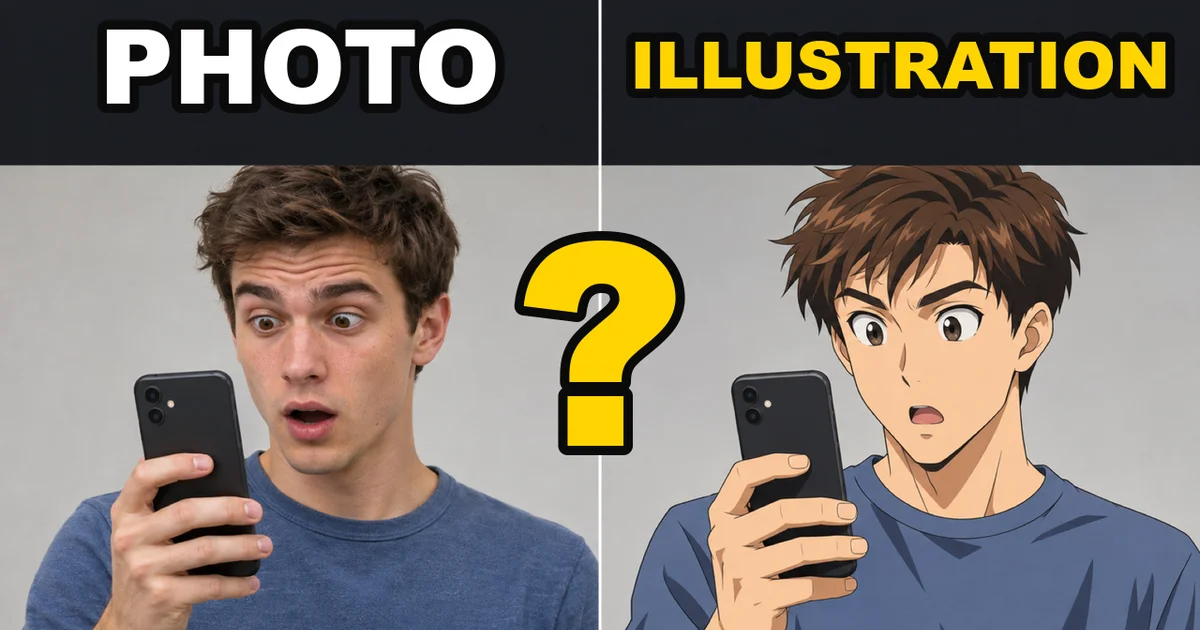
Real photo or illustration? Which thumbnail actually gets more clicks on social media?
I made a video about this question. A video can only flash a number for a few seconds. This article has the parts the video skipped: the exact quotes from MrBeast's thumbnail lead, what each famous study actually measured and on how many people, the limits of every number, and the rules of YouTube's own thumbnail test.
The short version
- I could not find a single study that compares clicks on photo thumbnails against illustration thumbnails directly. Not in English, not in Japanese.
- MrBeast's team puts a real face in every thumbnail, talks about trust first, and tests instead of guessing. Their closed mouth test ran for about 30 videos.
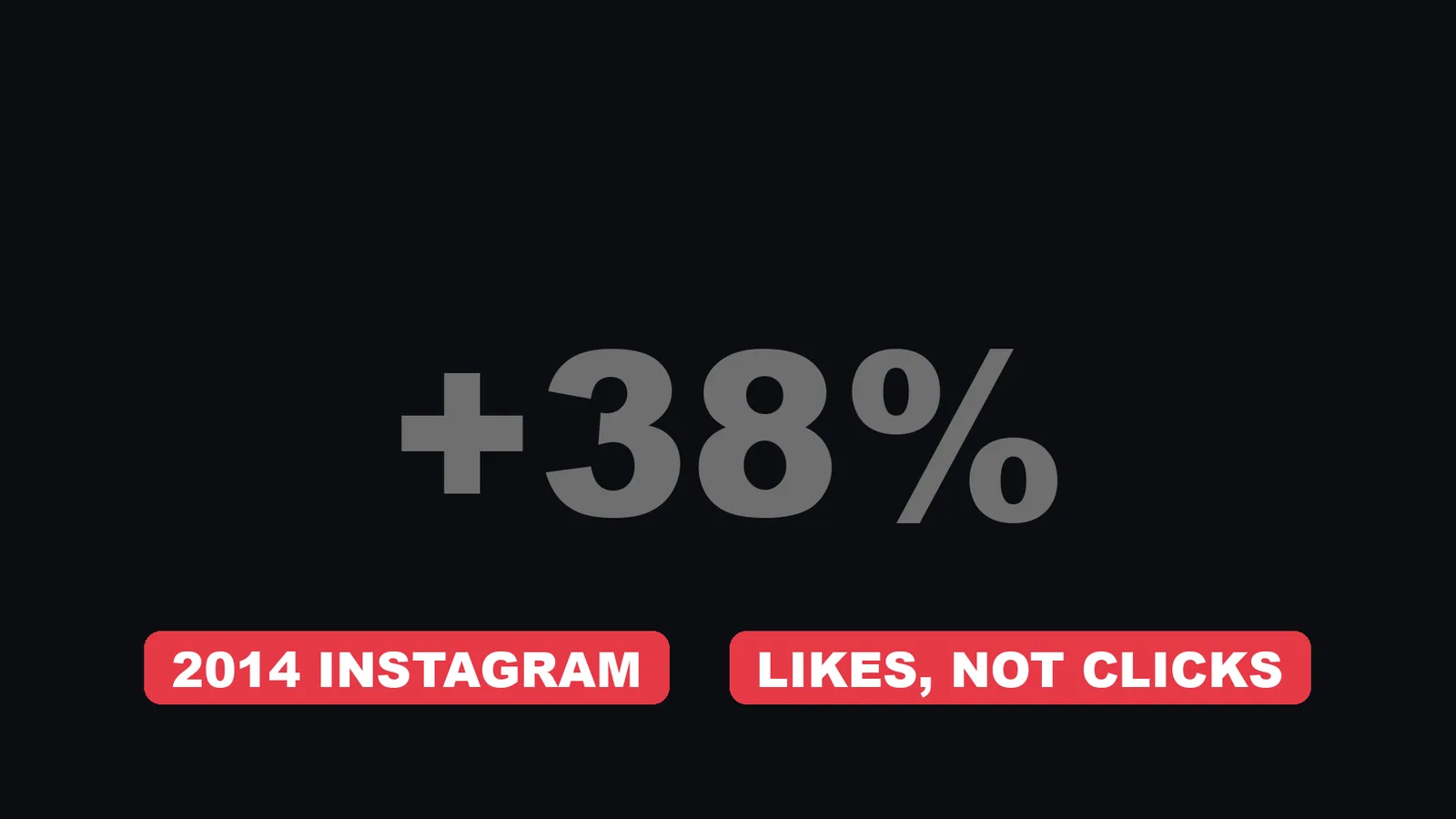
- The famous "faces get 38% more" number is about likes on Instagram photos in a 2014 paper. It was never about clicks on YouTube thumbnails.
- A 2025 look at more than 300,000 viral YouTube videos found thumbnails with and without faces performed about the same. It depended on the niche.
- What did move the numbers in three separate studies was not the picture. It was what people believed about who made it.
Why I care
I run YouTube channels in Japanese and in English. Most of my thumbnails use an anime style version of me.
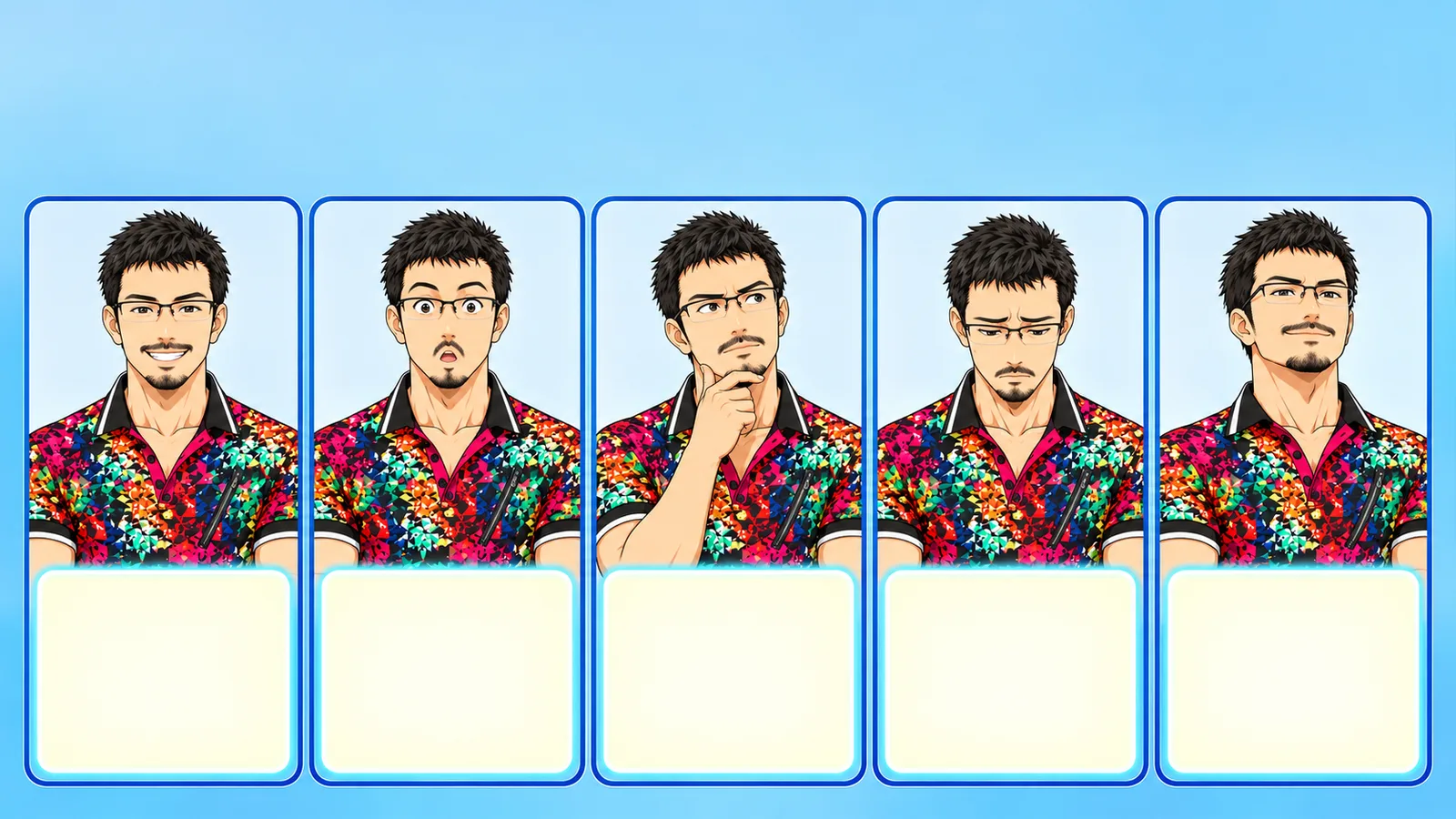
On October 28, I changed my profile picture to that illustration too. My business partner took one look and said it made me look kind of suspicious. I switched back to a real photo the same day.
So this question is not theory for me. And everyone online has an opinion. Faces win. Faces are dead. AI is the future. AI is lazy.

The topic is popular, too. When I searched YouTube on November 3, "STOP USING AI IN YOUR THUMBNAILS!!" had about 454,000 views, and "Why our Thumbnails Look Like This" had about 957,000.
I went looking for numbers instead of opinions. Before trusting my own taste, I started with the channel that wins this game.
What MrBeast's thumbnail lead actually said
In March 2024, YouTube interviewed Chucky Appleby, who runs thumbnails for MrBeast. Social Media Today wrote it up on March 8, 2024. Here are his words, quoted from that article.
| Topic | What he said |
|---|---|
| The face | "In 2019 we decided to start putting Jimmy's face in every thumbnail, because we were branding the videos around him." |
| Why the face | "If you trusted Jimmy on the last video that he uploaded, and he delivered on the content, then the next video you see his face and you'd be like 'oh, that's the guy that delivered on the last video I enjoyed so I'm going to click on this video as well.'" |
| Trust | "Trust is what makes people come back and click on your videos." |
| What happens without it | "If we had lied in any of our videos, and people felt like they were misled, the audience wouldn't keep building, and eventually we'd start to see the audience not coming back" |
| Versions | "changing the shirt colors, putting Jimmy in a suit, putting him in a shirt with the MrBeast logo, a different color of a house, we change so many different aspects so we end up having hundreds of variations." |
The closed mouth test
This is my favorite part of the interview. Appleby was the one pushing for the classic open mouth, shocked face. Jimmy kept saying they should close the mouth. When YouTube's A/B test came out, they ran it.
"we did it for about 30 videos, and all 30 of them with the closed mouth actually led to higher watch time."
He added something that is easy to skip: "It was a small difference in overall time, but 30 in a row gave us the signal."

MrBeast posted it himself on X in September 2023: "I closed my mouth on all my thumbnails and the watch time went up on every video lol"
Notice what they measured. Not clicks. Watch time. I come back to that below.
So the biggest channel on YouTube uses a real face, chases trust, and tests instead of guessing.
The 38% number
You have probably heard that faces get 38% more engagement. I followed it back to where it started.
| Question | Answer |
|---|---|
| Where it comes from | A paper at CHI 2014, by researchers at Georgia Tech and Yahoo Labs |
| What platform | |
| What was studied | A random selection of 1.1 million Instagram photos |
| What it measured | Photos with faces were 38% more likely to receive likes, and 32% more likely to receive comments, after controlling for the poster's followers and activity |
| What did not matter | The number of faces, their age and their gender made no difference |
| What it did not measure | Clicks. YouTube. Thumbnails |
Mark Studios traced this number and found it restated in 2026 by thumbnail blogs as "thumbnails with faces get 38% more clicks." Likes on a photo in your feed became clicks on a thumbnail somewhere along the way.
Why does it keep showing up? It is simple, it sounds scientific, and it tells people what they already want to hear: put your face on it and you will win. Nobody goes back to check where it came from.
What a bigger YouTube dataset found
Search Engine Journal reported on December 22, 2025, on a dataset from 1of10 Media.
| Item | What the report says |
|---|---|
| Sample | More than 300,000 viral YouTube videos from 2025, across tens of thousands of channels |
| How performance was scored | An "Outlier Score": a video's views compared with the channel's median views |
| Faces vs no faces | Performed similarly |
| By niche | Finance did better with faces. Business did worse |
| By channel size | A face helped only channels above a certain size, and only modestly |
| Several faces | Thumbnails with several faces did best |
Nate Curtiss, Head of Content at 1of10 Media, put it this way: "It depends on your niche, your format, and how many faces you use."
One detail matters here. This was a measure of views against the channel's normal, not click rate. So the honest summary is that faces did not make a big difference on average, and the topic decided the rest.
Mark Studios also lists an older study from Lingnan University: 51% of 16,215 videos used human faces, and faces were associated with more viewers. That is an association, not an experiment. No study on that page gives a click uplift for faces.
So photo versus face versus no face is not where the real difference is.
What actually moved the numbers
Then I found something that did move the numbers. And it was not about style at all.
Three studies, three different setups. None of them tested YouTube thumbnails. They tested ads. But they all point the same way.
| Study | Who and where | What they changed | What happened |
|---|---|---|---|
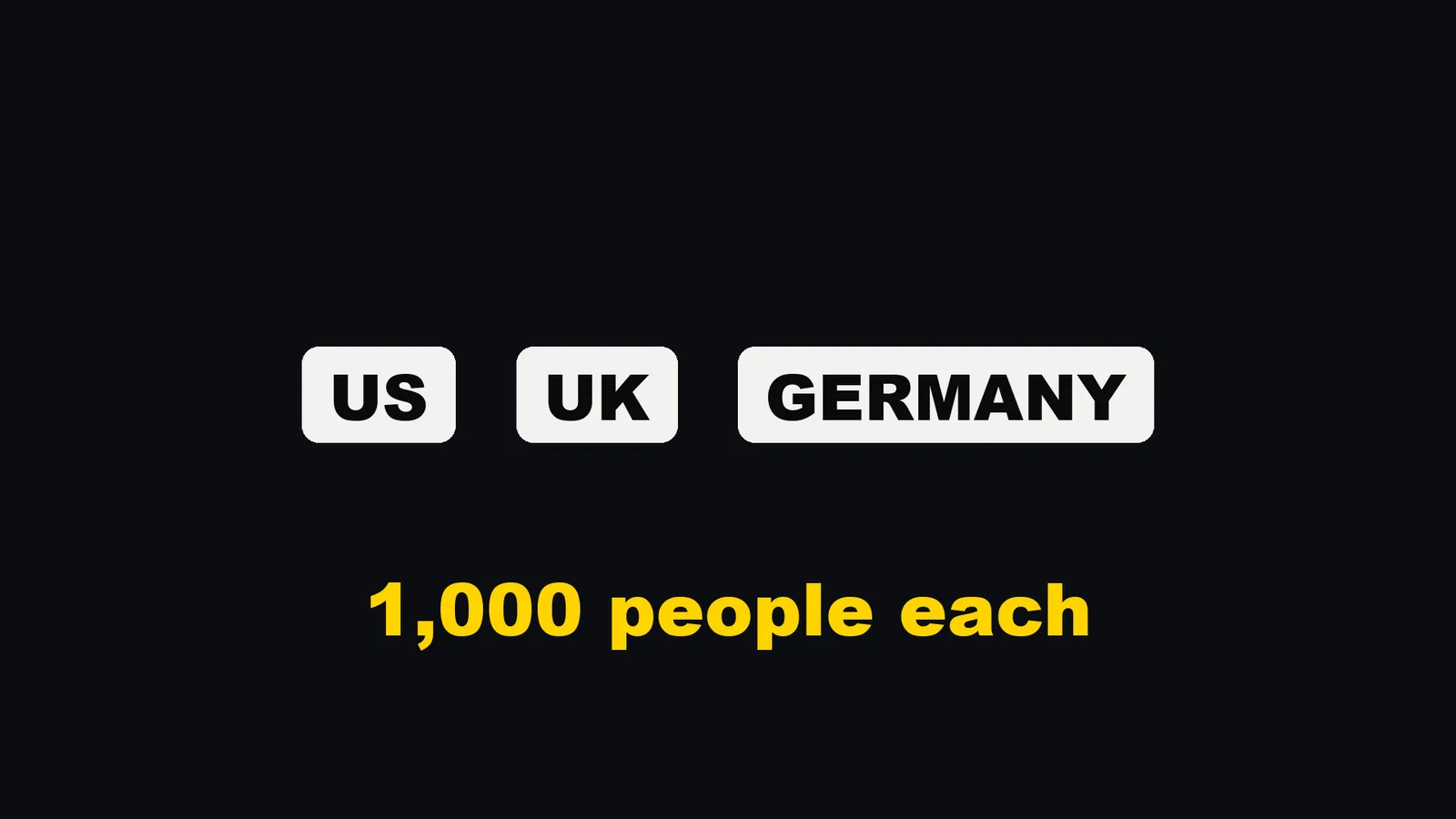
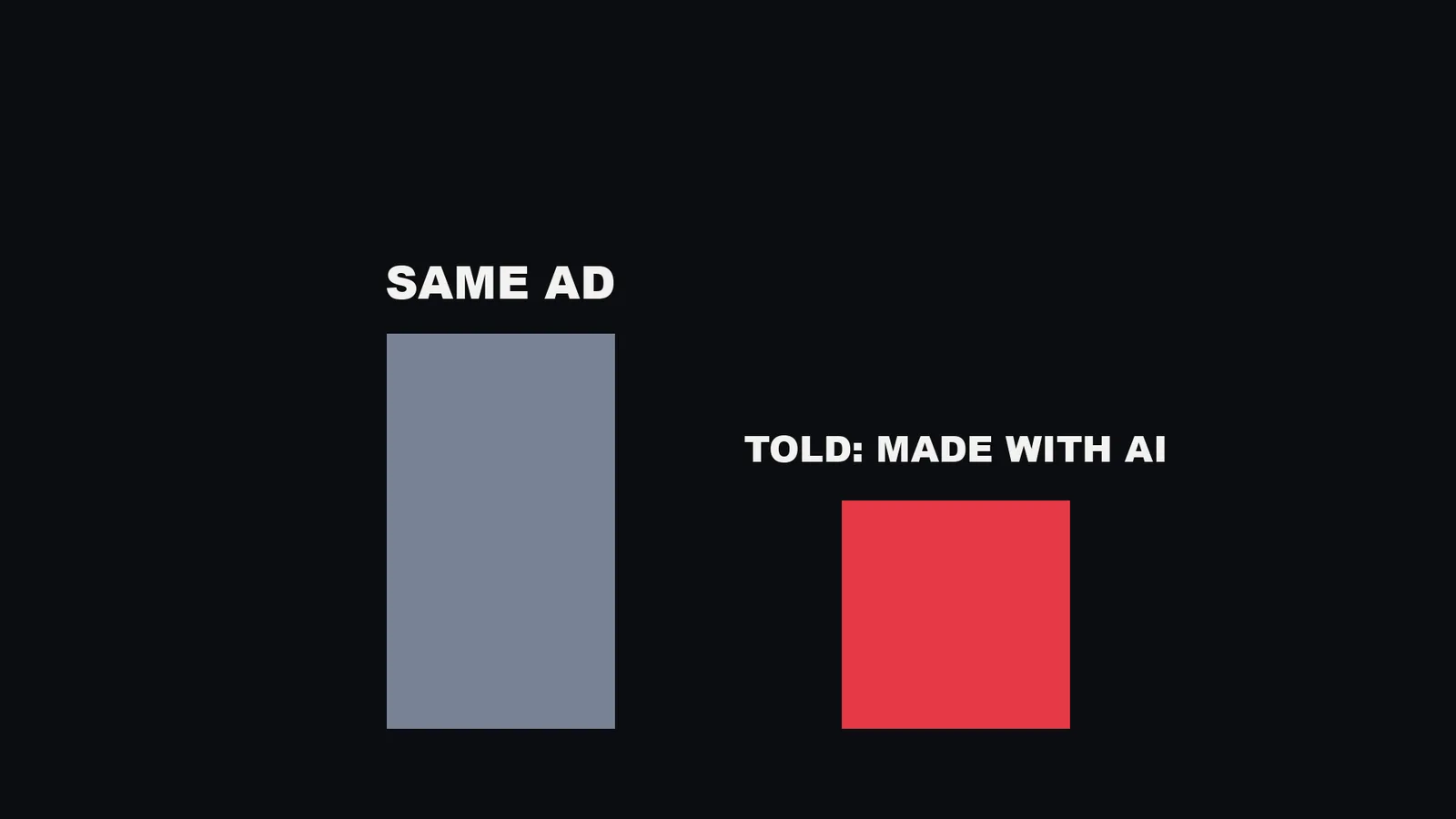
| NIM, "Transparency Without Trust" | A survey of 1,000 people each in the US, the UK and Germany | The same product ad, described to half of them as a photo and to the other half as AI generated | The AI version was rated more negatively, especially on emotional aspects. People were less inclined to click or engage. The authors call the effect "small but meaningful" |
| International Journal of Information Management, Vol. 85 (December 2025) | Hospitality services, mixed methods | Real images against AI generated images | People preferred services shown with real images. The drop was stronger for hedonic services than utilitarian ones, and for highly involved customers |
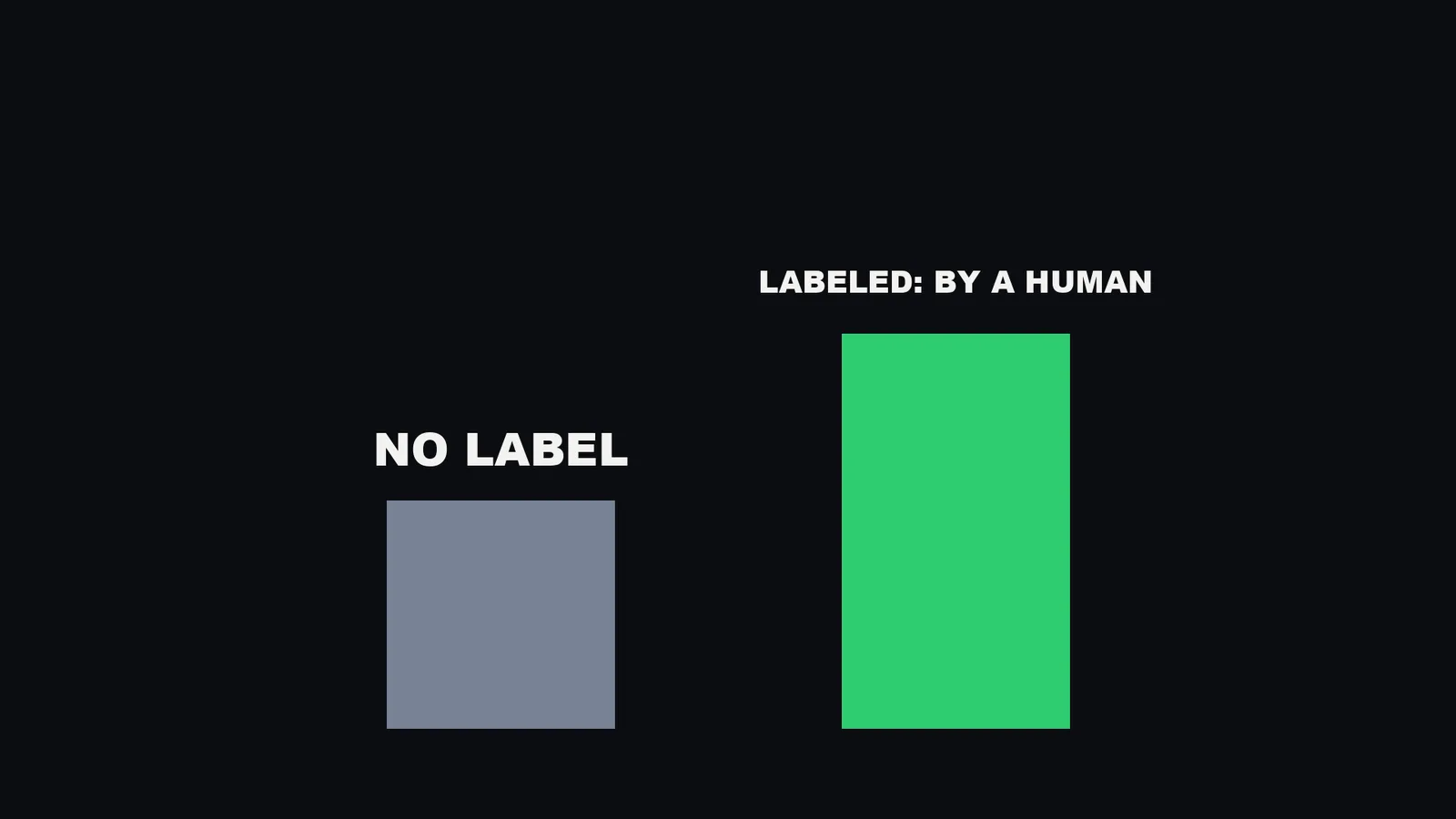
| Equilibrium. Quarterly Journal of Economics and Economic Policy, 20(4) (December 2025) | A 2 by 2 experiment: snacks and laptops | Who really made the ad, and what the label said | Ads labeled as made by a human got higher trust and purchase intent, even when they were actually made with AI. Ads labeled as AI got lower trust and intent, especially for laptops |
The NIM study in more detail
The NIM page gives the survey numbers behind it, averaged across the three countries.
| Statement | Share |
|---|---|
| Aware that AI can create marketing content | 44% |
| Understand how AI uses personal data for personalization | about 28% |
| Think they can recognize AI generated content | 25% |
| Trust AI companies and their promises | 21% |
| Trust AI itself | 20% |
A second experiment, in Germany only, showed six ads to two groups. One group saw them labeled "AI-generated", the other "human-generated". The AI label led to more critical ratings and lower willingness to research or buy. The effect was weaker for innovative, high tech products, and for people who already trust AI more.
The page does not publish click rates or exact scores, so I can't give you a percentage.
The hotel study in more detail
The paper is "Customer reactions to generative AI vs. real images in high-involvement and hedonic services" by Daniel Belanche, Sergio Ibáñez-Sánchez, Pau Jordán and Sergio Matas.
A hedonic service is one you buy for the feeling, like a vacation. That is exactly where the gap got bigger.
The qualitative part asked people why. They saw companies using AI images as impersonal, less professional, lacking credibility, and potentially misleading. And they said AI images got in the way of picturing the actual experience.

The label study in more detail
The paper is "AI-generated versus human-created advertising: Effects on consumer trust and purchase intent" by Khalil Israfilzade, Vytautas Magnus University. People were randomly placed in four groups: made by AI or by a human, and labeled as AI or as human.
This is the result that surprised me most. The label beat the reality. An ad made with AI but labeled as made by a human did better on trust and purchase intent.
My guess at why
This part is my own guess, not a finding. I think it is about effort. When we think a person made something, we assume someone cared and spent time. If they spent time on the thumbnail, maybe they spent time on the video too. A machine label breaks that chain in one second.

The picture did not matter as much as what people believed about the picture.
What I see in Japan
This matches what I see in Japan. People here are very quick to spot AI images now. Comments like "Everyone can tell you made this with AI" show up fast. Once that label is in someone's head, the click is gone.
And this is where illustrations get into trouble. In 2026, a lot of people see any illustration and assume it is AI. Even when a human drew every line.

What makes a thumbnail look AI
From the comments I read, it is usually the same five things.
| Sign | What people point at |
|---|---|
| Skin | Too smooth |
| Light | Too perfect |
| Glow | A soft haze around everything |
| Hands | Fingers that look a little wrong |
| Text inside the image | Letters that look slightly melted |
None of these are about style. A photo can have all five. An illustration can have none. It is the polish that gives it away, not the medium.
If you use illustrations like I do
The job is to show that a real person is behind them.
- Use the same character every time, so people learn who it is.
- Put real screenshots inside the frame.
- Put real numbers in it.
- Add things a generator would not know.
When a photo fits, and when an illustration fits
| Situation | Better fit | Why |
|---|---|---|
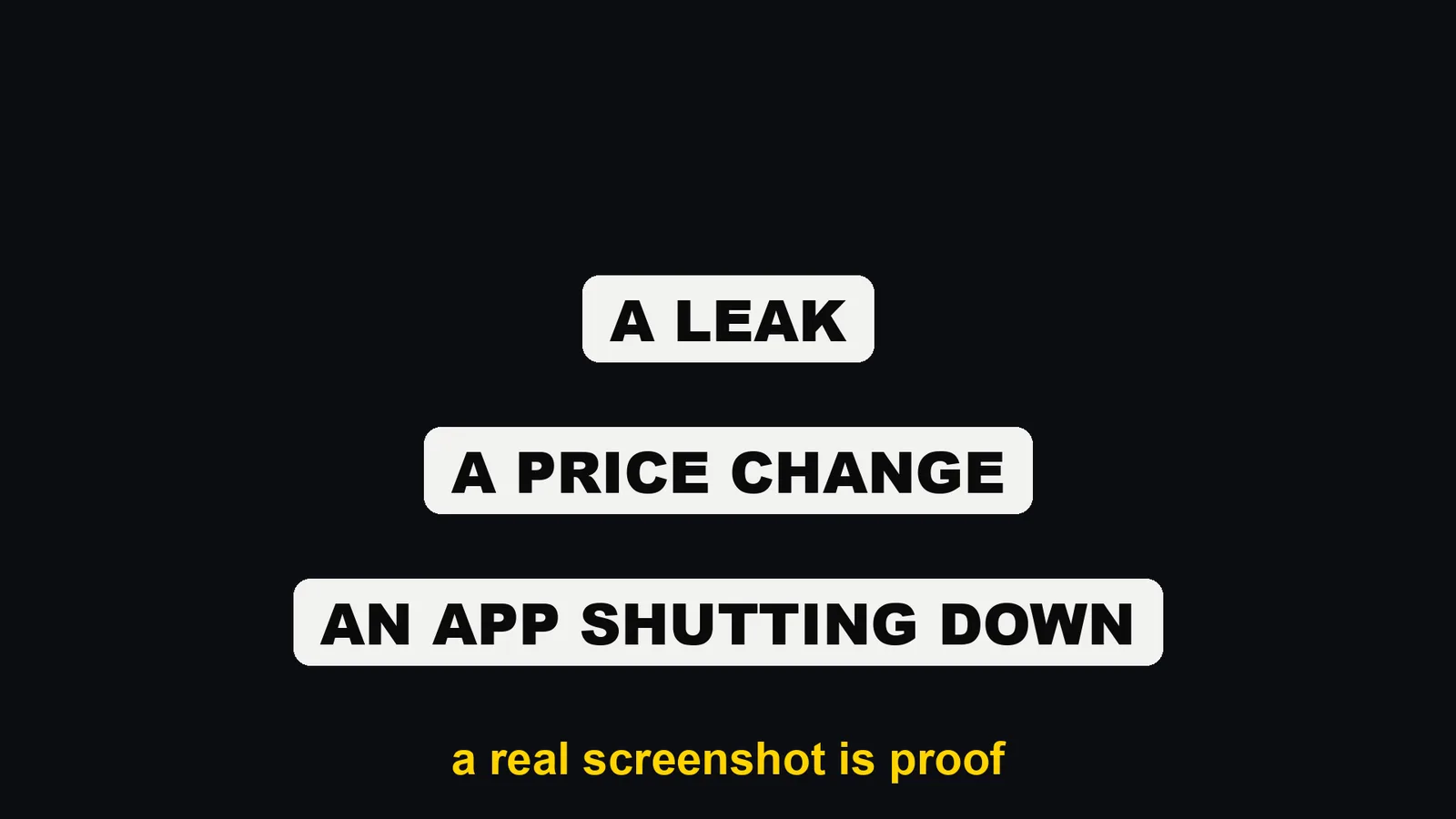
| Something real happened: a leak, a price change, an app shutting down | A real screenshot or a real photo | It is proof. People want to see the thing itself |
| An idea that does not exist as a photo, like how an algorithm decides what to show you | An illustration | There is nothing real to photograph, so a drawing says it faster |

Thumbnails in Japan look different
Open YouTube in Japan and the thumbnails look nothing like the US. Big colorful text. Three or four lines. Yellow, red, outlines everywhere.
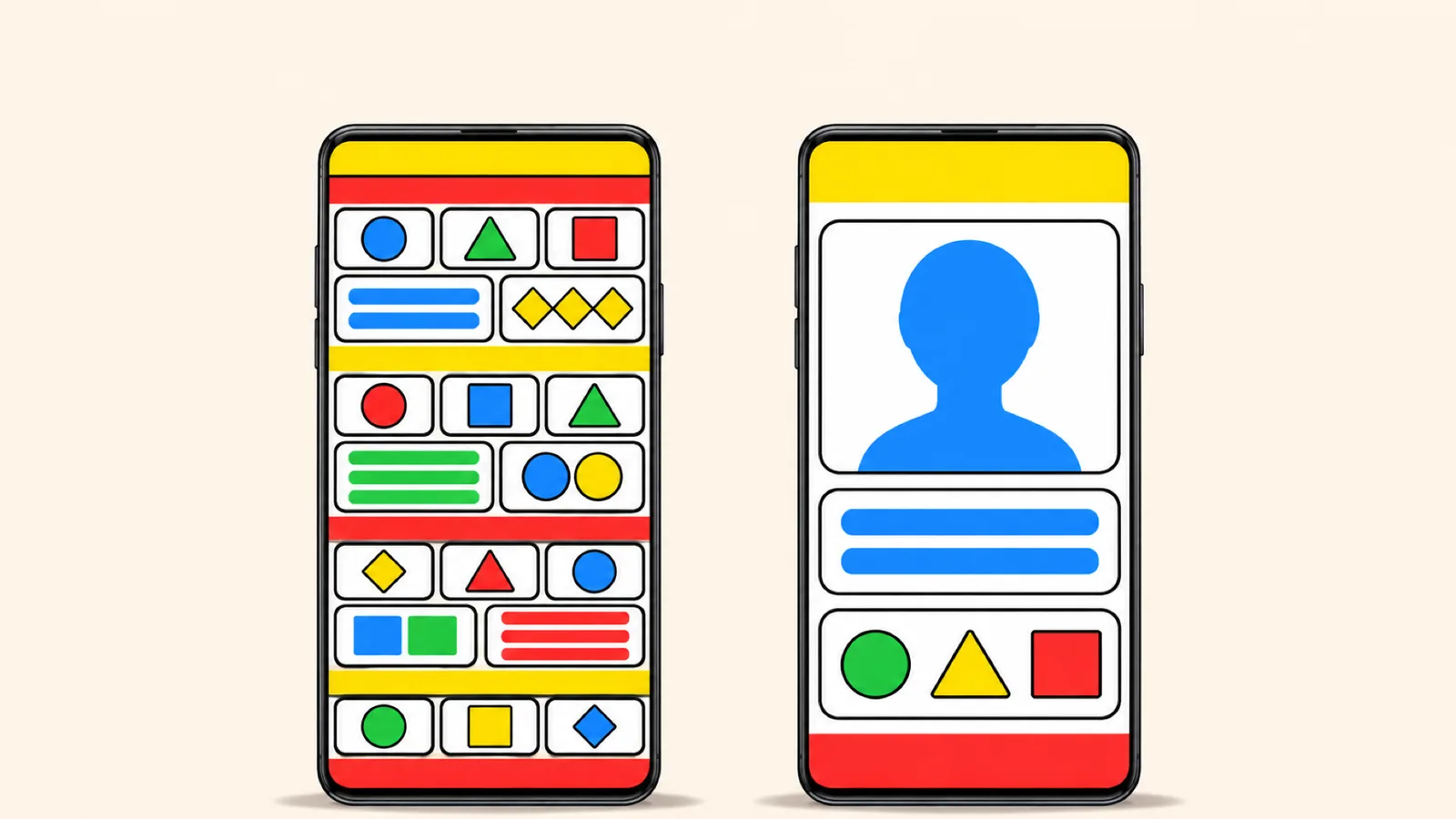
In the US, that looks messy. In Japan, it works, because people read thumbnails like a newspaper headline. Illustrations are everywhere there too, because manga made drawings feel normal, not cheap.

But even in Japan, the comments calling out AI are growing fast. If it is changing in the country that loves illustrations the most, it is changing everywhere.
What winning thumbnails have in common
From what I have looked at, two things.
| Loses | Wins | |
|---|---|---|
| Words | A vague tease: "You won't believe..." | Exactly what happened: something broke, something changed, something cost money |
| What to look at | Five icons fighting for attention | One big thing: a logo people already know, or one face |
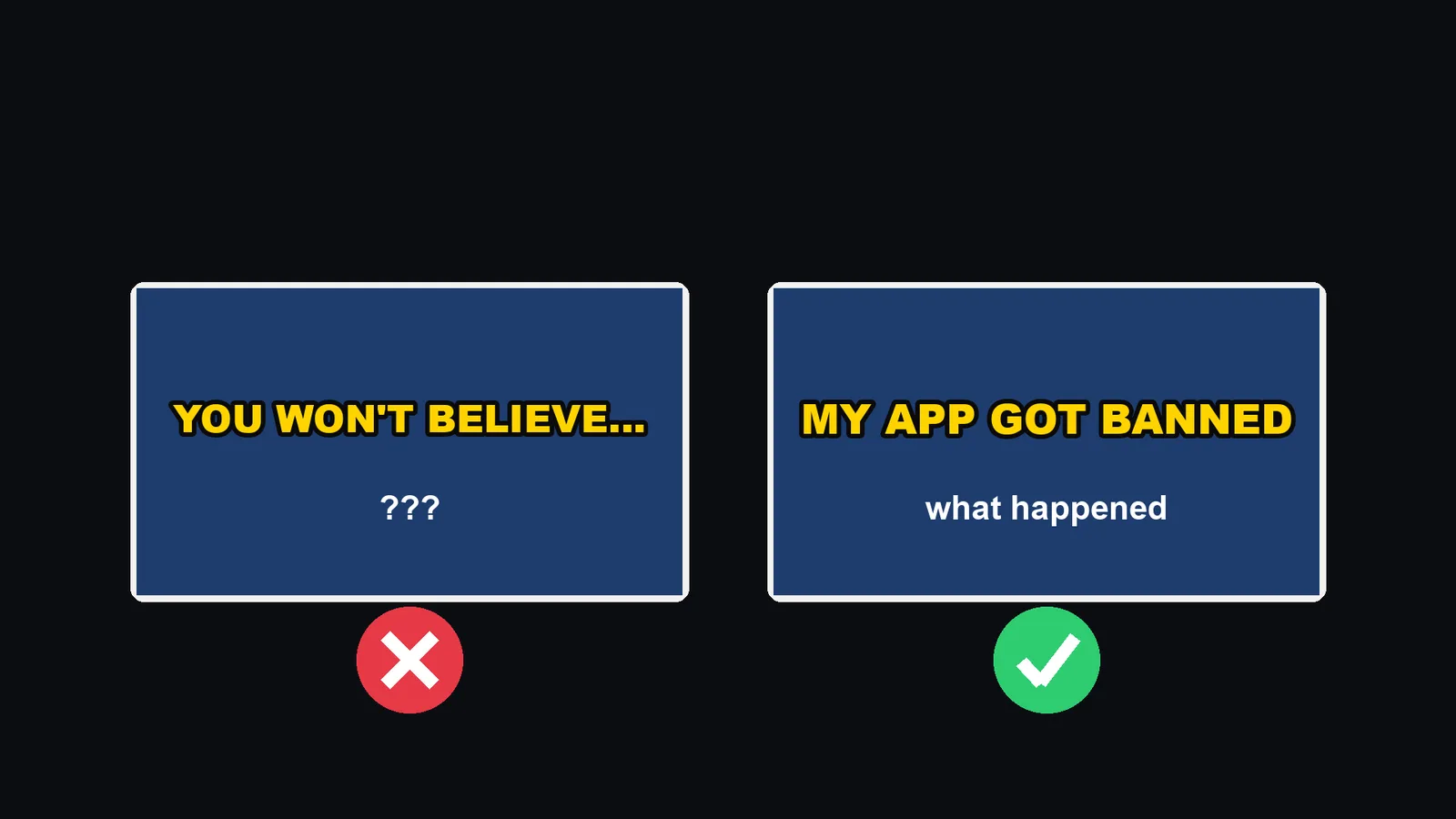
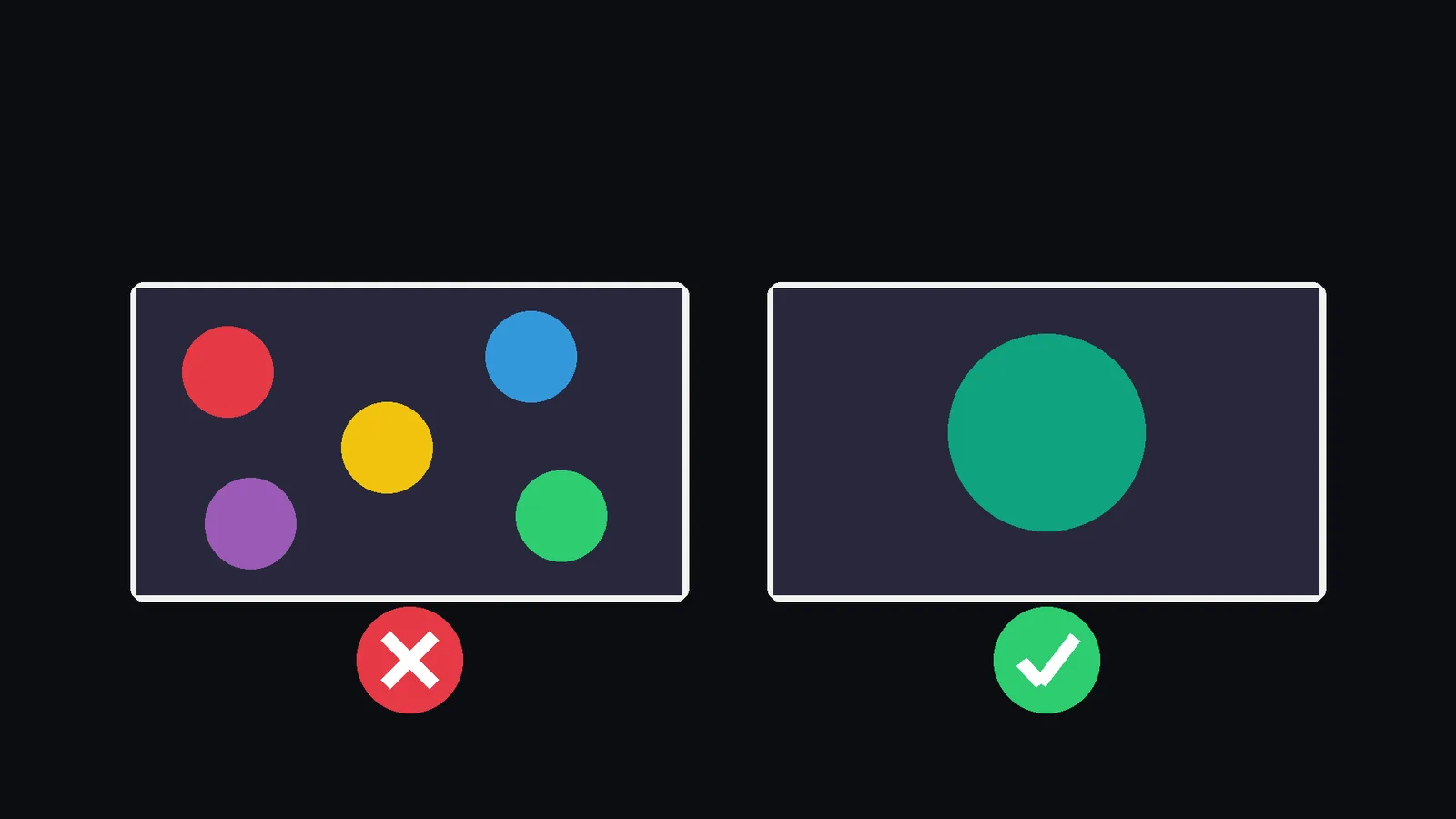
Notice what is not on that list. Photo or illustration. Both can win. Both can lose.
How to stop guessing: YouTube's thumbnail test
YouTube has a built in A/B test called Test & compare. Here is what its help page says, as of November 4, 2026.
| Item | The rule |
|---|---|
| How many | Up to 3 different titles and thumbnails per test |
| Where | Only on a computer, in YouTube Studio |
| Who | Advanced features must be turned on for your channel |
| What can't be tested | Shorts, scheduled lives and premieres (premieres become eligible after they turn into long videos). Videos made for kids, mature audience videos and private videos |
| How long | A few days, up to two weeks |
| How the winner is picked | The one with the highest watch time is shown to all viewers |
| If there is no clear winner | The first one you uploaded is shown |
| Result labels | Winner, Performed Same, Inconclusive |
The detail most people miss: YouTube does not pick the winner by clicks alone. It picks by watch time. Rene Ritchie at YouTube said "Thumbnail Test & Compare returns watch time rather than separate metrics on click-through rate (CTR) and retention (AVP)". And: "If you over-index on CTR, it could become click-bait, which could tank retention, and hurt performance."
So a thumbnail that gets clicks but disappoints people loses. The test rewards a thumbnail that tells the truth about the video. That is the same thing MrBeast's team measured with the closed mouth: watch time, over 30 videos.
If you also look at click rate in YouTube Studio, here is the scale YouTube gives: "Half of all channels and videos on YouTube have an impressions CTR that can range between 2% and 10%."
What I do now
If the biggest channel on earth tests instead of guessing, a small channel like mine has no excuse to guess. So every long video I make now goes up with two thumbnails, A and B. The numbers decide, not my taste.
This video is running that test right now. A: a photo against an illustration. B: a phone screen and a single question.
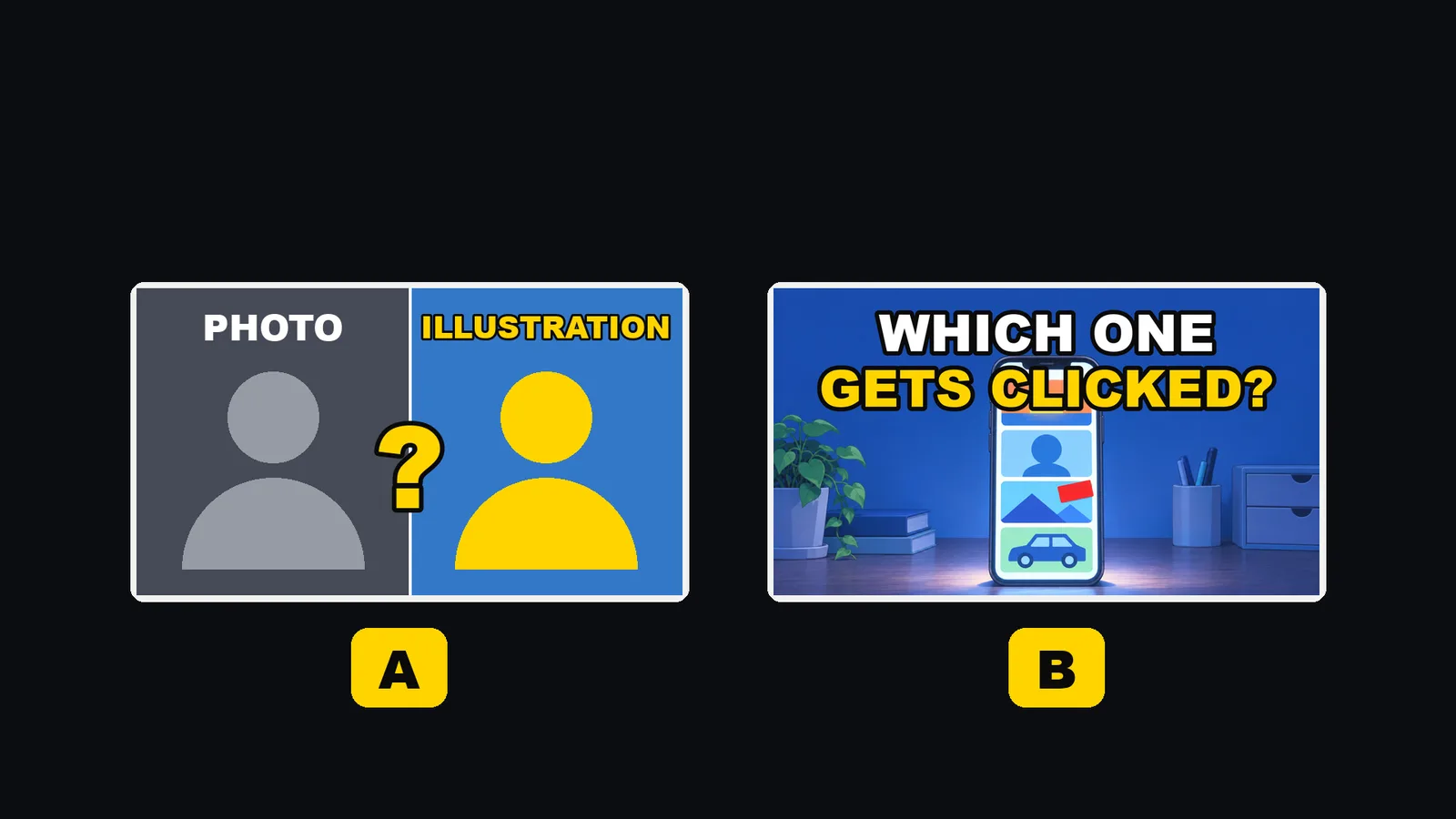
I don't know which one brought you here. YouTube does.
What I could not find
To be fair about the limits:
- No study I found measured clicks on photo thumbnails against illustration thumbnails directly.
- The three studies on AI images tested ads, not YouTube thumbnails.
- The NIM page publishes no click rates or exact scores, and no sample size for its experiments.
- The 1of10 Media dataset scored videos by views against the channel's median, not by click rate.
- The five signs of "looks AI" come from comments I read, not from a study.
The real question
So, real photo or illustration? Honestly, that is the wrong question.
The real question is this. When someone sees your thumbnail, do they think a person made it, or a machine?
Get caught looking like AI, and you lose the click. Whatever style you picked.
Sources: Social Media Today, "YouTube Shares Insights Into How MrBeast's Team Creates Compelling Thumbnail Images" (March 8, 2024). MrBeast's post on X (September 2023). Search Engine Journal, "Do Faces Help YouTube Thumbnails? Here's What The Data Says" (December 22, 2025), on data from 1of10 Media. Mark Studios, video thumbnail and CTR statistics, on the CHI 2014 paper from Georgia Tech and Yahoo Labs. NIM (Nuremberg Institute for Market Decisions), "Transparency Without Trust", NIM INSIGHTS Research Magazine Vol. 7. Belanche, Ibáñez-Sánchez, Jordán and Matas, International Journal of Information Management 85, 102954 (December 2025). Israfilzade, Equilibrium. Quarterly Journal of Economics and Economic Policy 20(4), 1301 to 1337 (December 30, 2025). YouTube Help, "A/B test titles & thumbnails" and "Impressions & click-through-rate FAQs" (read November 4, 2026). View counts are from a YouTube search on November 3, 2026.