 Hisashi Space
November 5, 2026 · 13 min read
AI YouTube Automation with Claude Code: My Real Workflow, What Google Says About AI Content, and the Catch
You have seen the videos. Let AI automate your whole YouTube channel, and get rich.
I wanted to know if that is true. So I built a real AI video workflow with Claude Code and ran it every day.
I made a video about it. This article has the parts a video can't hold: each step written out, who does what, the exact words Google used about AI content, my review numbers in tables, and a checklist you can follow.
The short version
- Claude Code makes videos for three of my YouTube channels every day. It is just me.
- Google has said two things that matter here: scaled content abuse is against its spam policies, and appropriate use of AI is not against its guidelines.
- So the question is not whether to use AI. It is how.
- My workflow has four steps, and a person (me) approves at two of them.
- I hit five catches. The biggest: AI can't tell you what is worth making.
- Automation got me volume. It did not get me an audience.
Who I am, and why I tried this
I have been in the IT industry for over 20 years. I have run my own company in Tokyo for 22 years. I have done SEO for 27 years.
YouTube is not my main income. I started these channels so more people find my business.
SEO paid back better than anything else over the long run. It is a big part of why my company is still here.
So this year I went all in on YouTube. Several channels, long videos and shorts.
What "12 a day" actually means
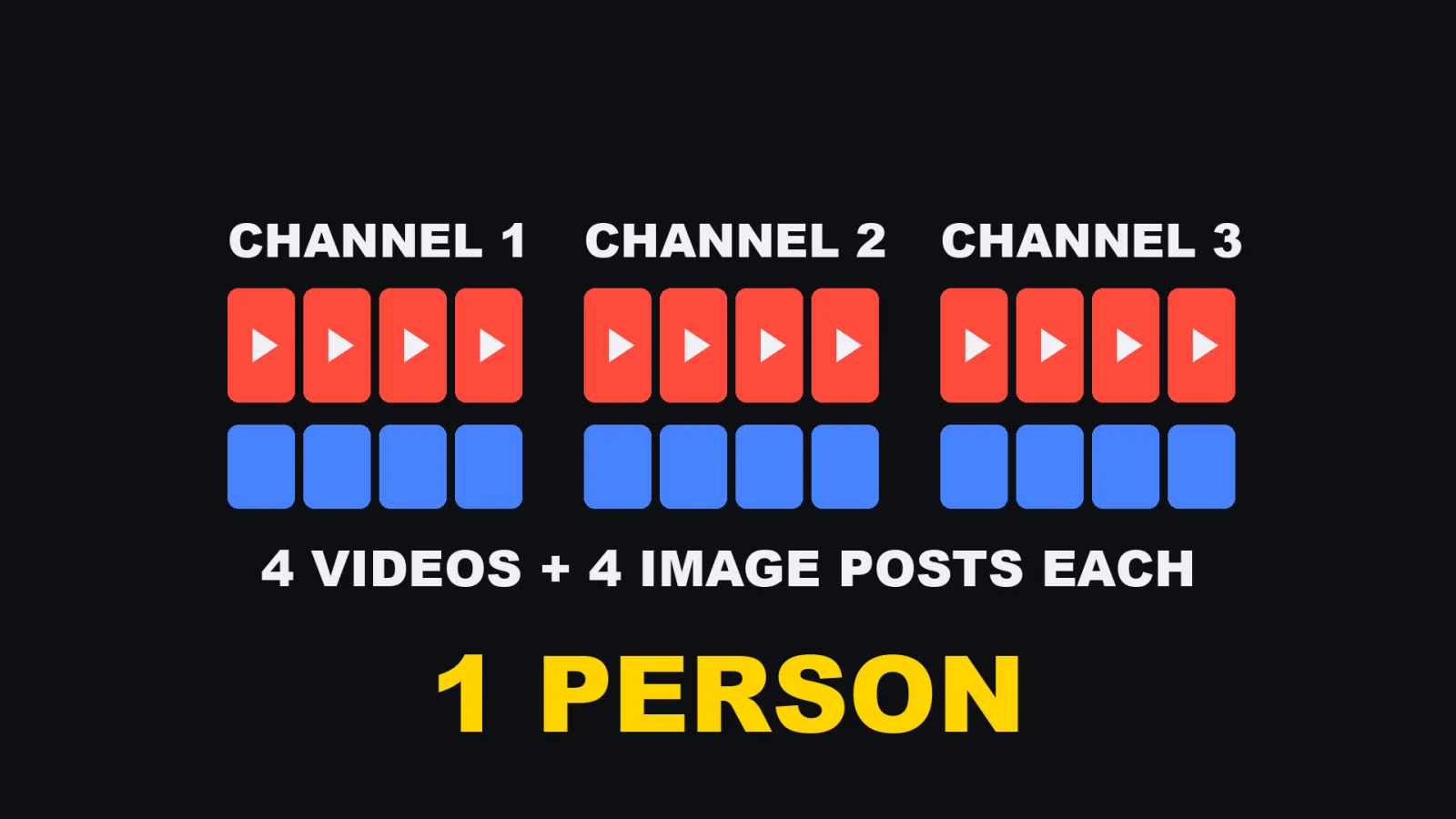
| Videos per day | Image posts per day | |
|---|---|---|
| Channel 1 | 4 | 4 |
| Channel 2 | 4 | 4 |
| Channel 3 | 4 | 4 |
| Total | 12 | 12 |
Two of the three channels are in Japanese. One person runs all of it.
And each video does not go to one place. It goes to eight: YouTube, Instagram, TikTok, Pinterest, LinkedIn, Facebook, Threads and X.
12 videos times 8 places is 96 uploads a day. Each place has its own caption and its own rules.
The dream you keep seeing

When I made the video, two others were going around.
| Video title (as shown) | Views when I checked |
|---|---|
| How I Make $24,000 a Month Posting YouTube Shorts Using Claude | 1.6 million |
| A video saying Claude Code monetized a channel in 14 days (out the week before) | Over 200,000 |
The story is simple. Let AI do everything, and the money comes.
Honestly, if that were true, I would love it. So I looked at it properly.
What Google actually says about AI content
After 27 years of SEO, I know what happens to content that AI pumps out with nobody checking. Search engines don't reward it.
You don't have to take my word for it. Google wrote it down twice.
Both posts below are about Google Search. They are not YouTube's rules. I read them because they are the clearest statement I know of how a big platform thinks about AI and volume.
March 5, 2024: scaled content abuse
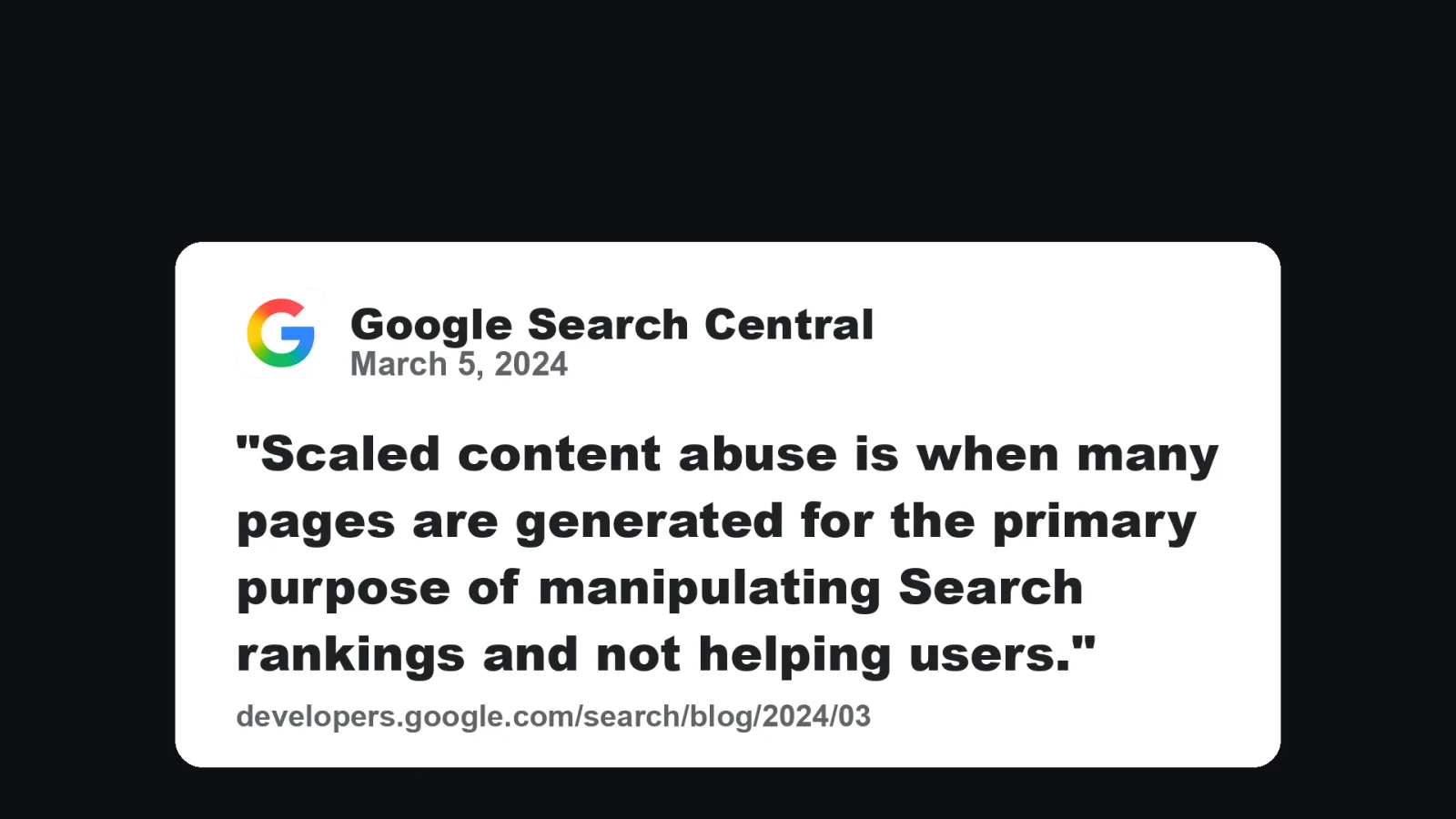
The post is "What web creators should know about our March 2024 core update and new spam policies" on the Google Search Central blog.
Here is the definition, word for word:
"Scaled content abuse is when many pages are generated for the primary purpose of manipulating Search rankings and not helping users. This abusive practice is typically focused on creating large amounts of unoriginal content that provides little to no value to users, no matter how it's created."
And this is the part people miss:
"no matter whether content is produced through automation, human efforts, or some combination of human and automated processes."
So it is not "AI is banned." It is "mass content made to game rankings is the problem, whoever makes it."
The same post also answers whether this changes how Google sees AI content:
"Our long-standing spam policy has been that use of automation, including generative AI, is spam if the primary purpose is manipulating ranking in Search results."
February 8, 2023: AI is allowed, if used the right way
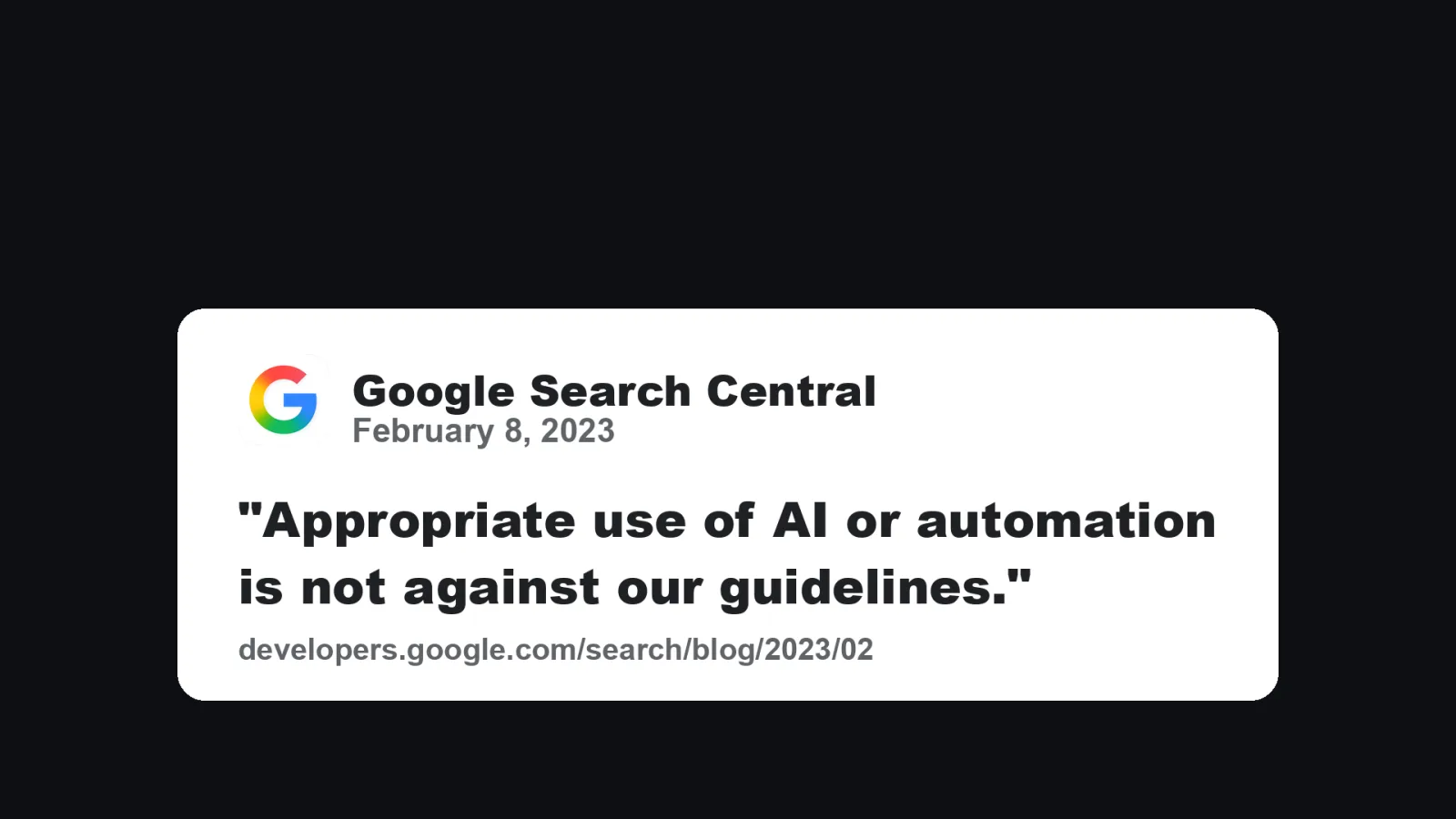
The post is "Google Search's guidance about AI-generated content," by Danny Sullivan and Chris Nelson.
In its FAQ:
"Appropriate use of AI or automation is not against our guidelines. This means that it is not used to generate content primarily to manipulate search rankings, which is against our spam policies."
And on what Google rewards:
"Our focus on the quality of content, rather than how content is produced, is a useful guide that has helped us deliver reliable, high quality results to users for years."
The same post points to a "Who, How, and Why" check on Google's page about helpful content. I read that page too. This is what it asks, in short:
| Question | What Google's page asks |
|---|---|
| Who | Is it clear who made the content? Is there a byline where one might be expected? |
| How | If automation is used to substantially generate content, is that self evident to visitors? Do you explain how it was used, and why it was useful? |
| Why | Is it made primarily to help people? Google calls this "perhaps the most important question." |
What I take from the two posts
| Google says | What I do |
|---|---|
| Volume made to game rankings is the problem, whoever makes it | Topics come from measured demand. I kill topics that aren't worth anyone's time |
| AI used the right way is fine | AI does the work. I make the calls |
| Quality matters, not how it was made | Every script and every finished video is checked by a person |
| Be open about how content was made | I am telling you exactly how, in this article |

So I built the whole workflow around one idea. Give people what they are looking for, as fast as I can, without crossing that line.
My AI video workflow, step by step
The obvious problem first. I can't film twelve videos a day. Nobody can.
So I built a pipeline around Claude Code.

It is not one Claude. It is dozens of Claude Code sessions running on my Mac at the same time.
| Session | Its job |
|---|---|
| One per channel | Makes that channel's videos |
| One per app | Works on that app |
| One counter | Every two hours, counts the posts and tells the others when they are behind |
Here is the flow for one video.
| Step | What happens | Done by |
|---|---|---|
| 1. Topic | Topics are measured, not guessed. Checks what people are searching this week, with real view counts | Claude |
| 2. Script | Writes a draft. I mark it up | Claude, then me |
| 3. Voice and images | A voice model reads the script. An image model draws each scene from a character sheet of me | AI models |
| 3b. Image check | Two other AI models look at every drawing | Codex and Gemini |
| 4. Machine check | Code checks the video before I ever see it | Code |
| 4b. Final watch | I watch the finished video once | Me |
| 4c. Post | Posts on schedule, from a real iPhone | Automation |
Where the line stops:
- At step 2, nothing moves until I say OK.
- At step 4, if a code check fails, the video won't export.
- At step 4c, if the account name doesn't match, it won't post.
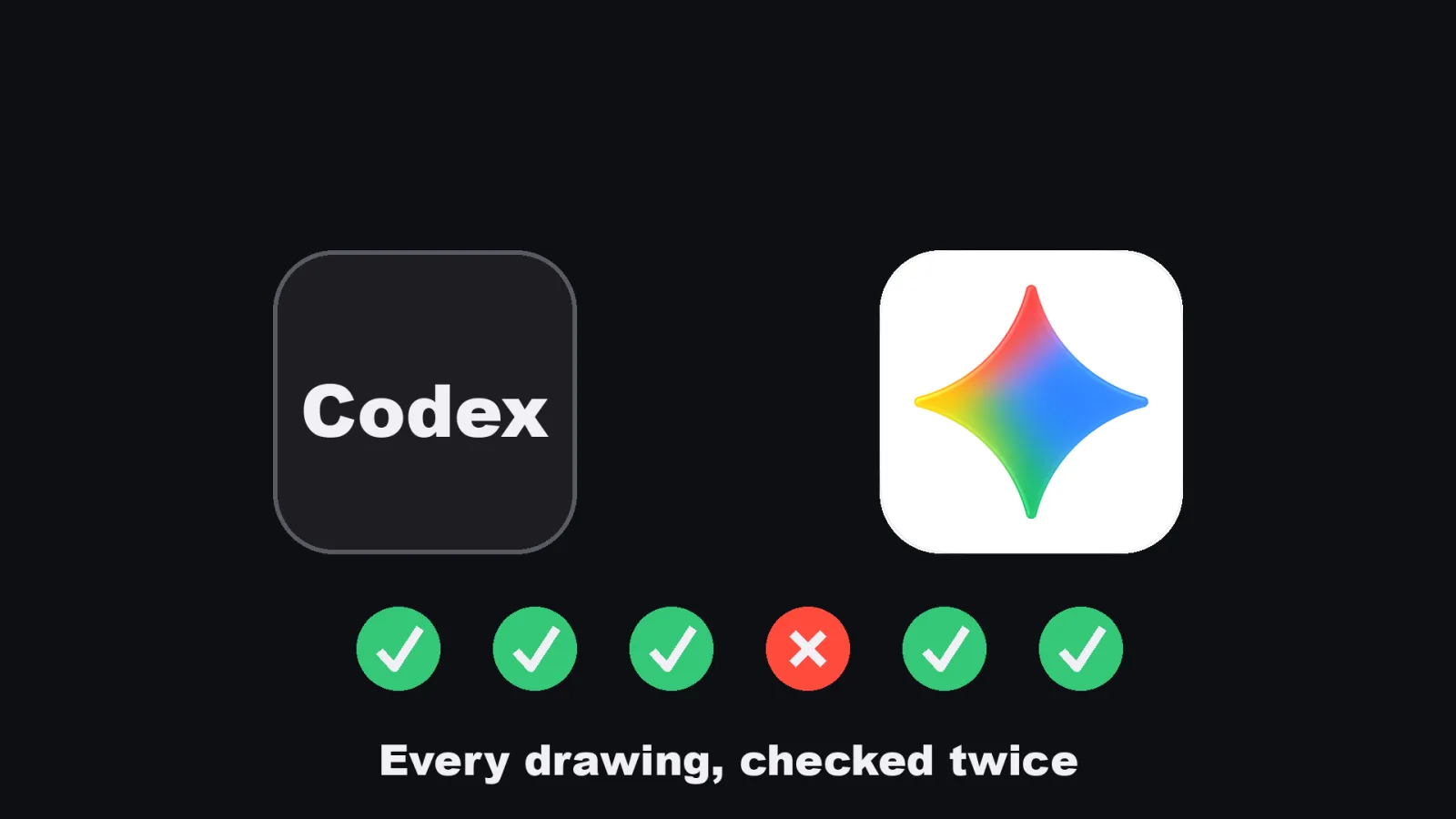
The two checking models look for things like whether the Apple logo faces the right way, or whether a hand has five fingers.
Why I post from a real iPhone
When one of my channels posted from a computer, TikTok labeled the video as AI made. It got zero views.
So now every video posts from a real iPhone.
Eight places, eight sets of rules
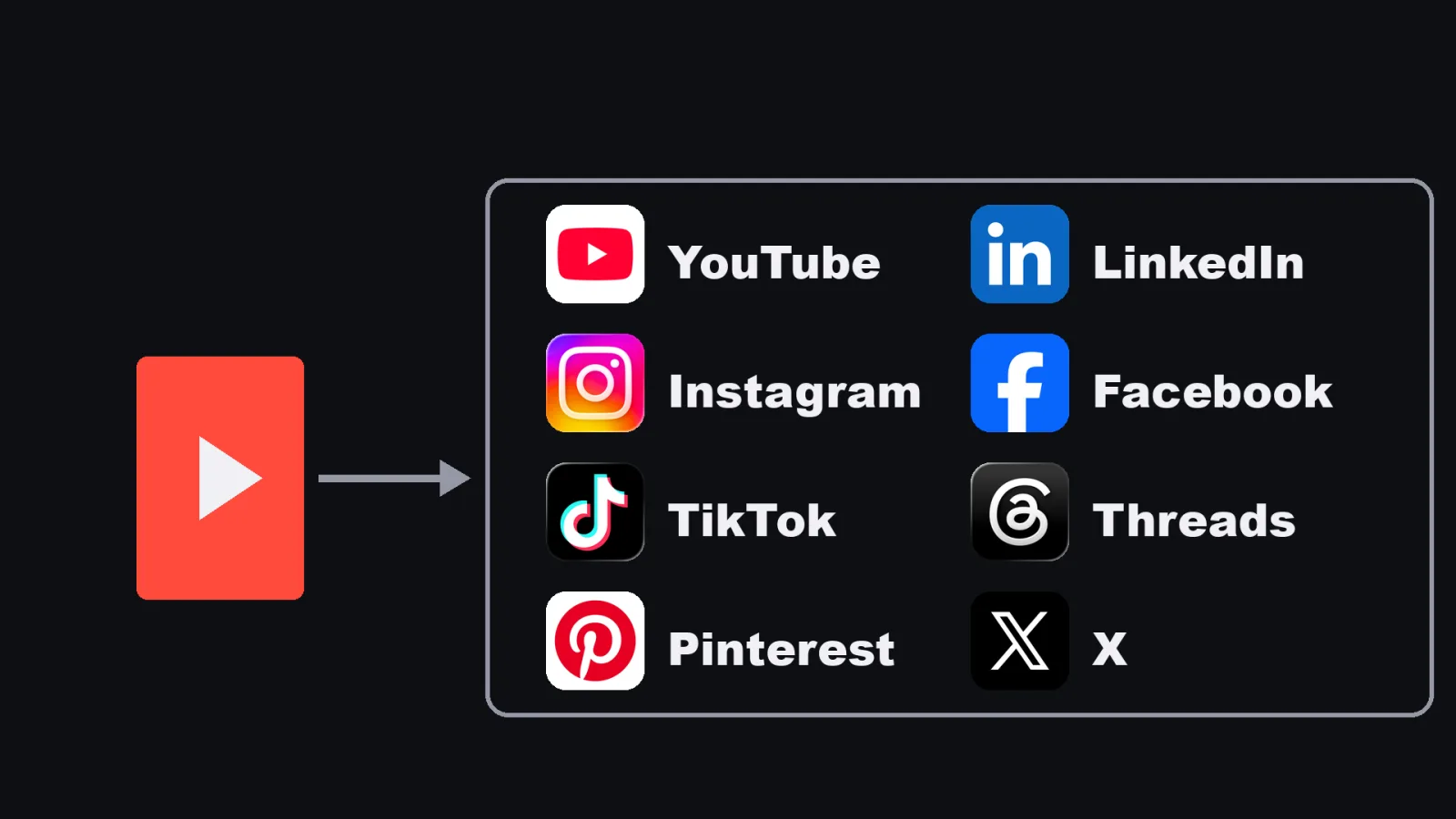
Each video goes to YouTube, Instagram, TikTok, Pinterest, LinkedIn, Facebook, Threads and X. Each one gets its own caption.
The image posts are made two days ahead. So they are never the thing holding up a video.
That is the dream version. Now the catch.
The five catches of AI YouTube automation
| # | Catch | What I do now |
|---|---|---|
| 1 | The bottleneck is human review | Review on one screen, comment on single frames |
| 2 | AI repeats the same mistake | Every mistake becomes a rule. Where possible, the rule becomes code |
| 3 | Japanese words read wrong | A reading dictionary, filled from the review screen |
| 4 | Posting to the wrong account | Read the account name before every post |
| 5 | AI can't pick what is worth making | I pick, and I say no |
Catch 1: the bottleneck is me
Every script, every storyboard and every finished video comes to one review screen.
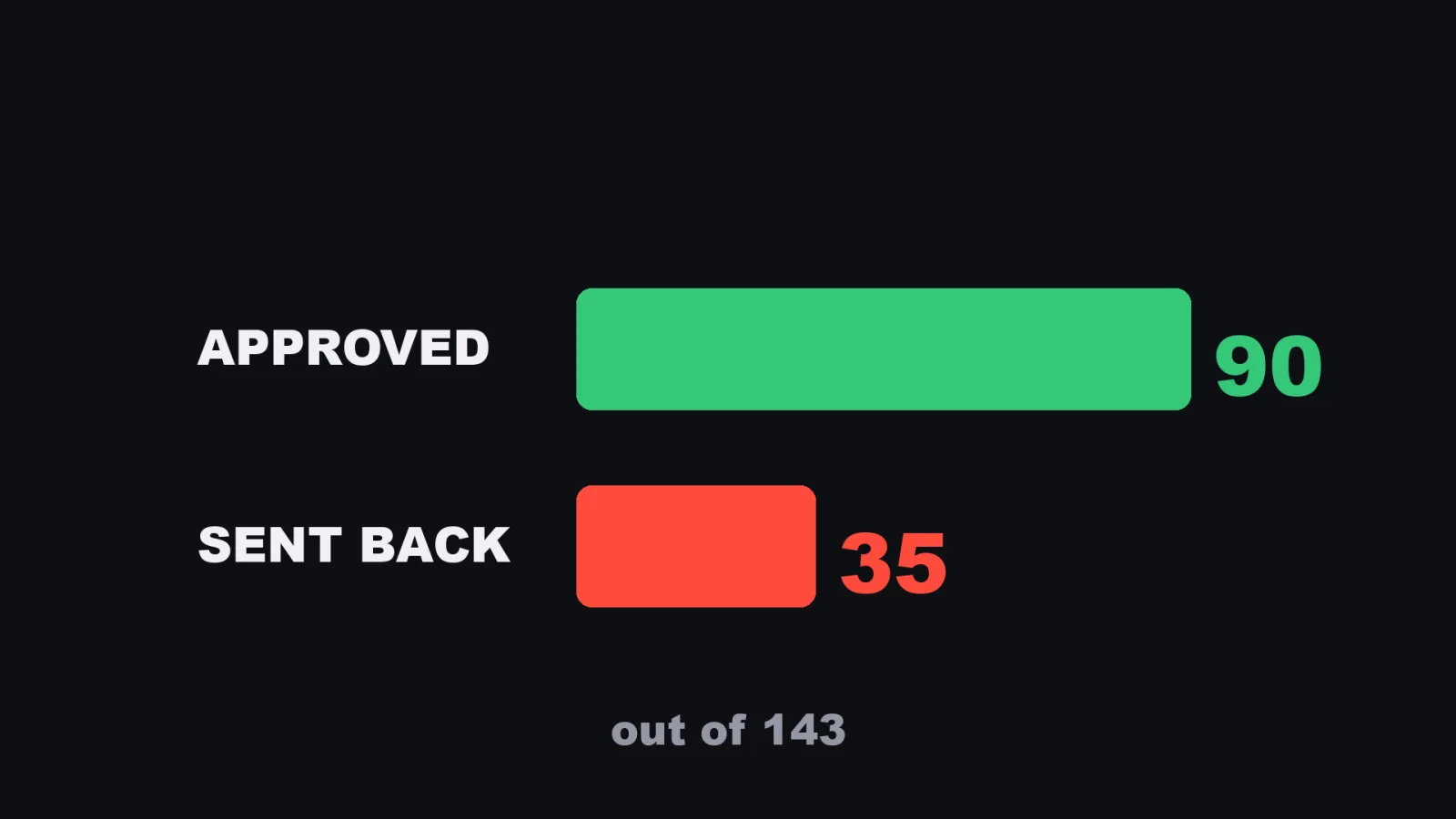
| In a day and a half | Items | Share |
|---|---|---|
| Arrived on my review screen | 143 | 100% |
| I approved | 90 | 63% |
| I sent back to be fixed | 35 | 24% |
That is about one in four sent back. AI can make videos faster than any human can watch them.
And it is not just yes or no. I leave comments on single frames. "This text is too small." "This box is off center." That comment goes straight back to the session that made it.
So the real limit on how many videos I post is not compute. It is how many hours I can spend looking at them.
Catch 2: AI makes the same mistake again and again
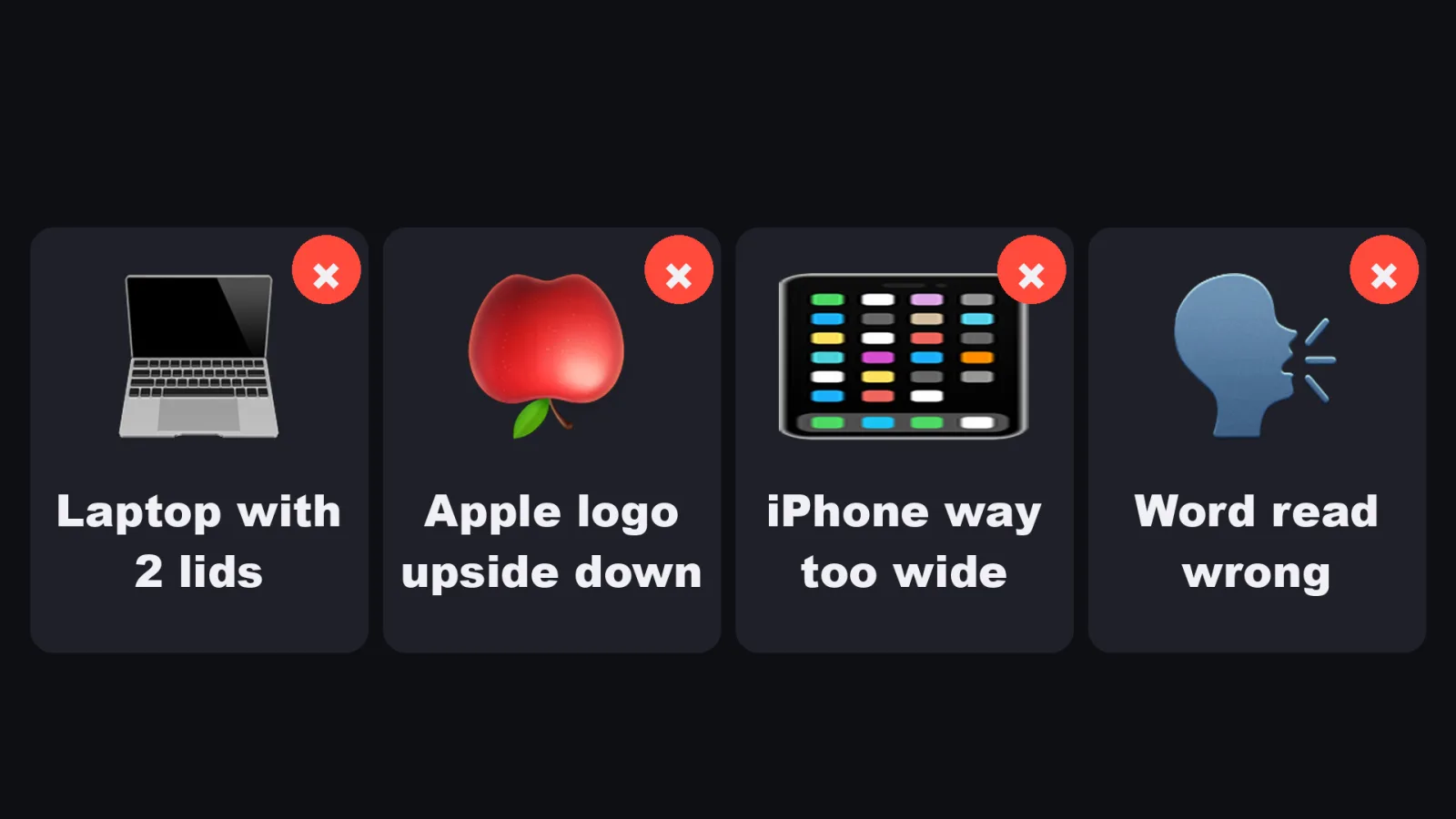
Real examples:
- A laptop with two lids
- An Apple logo upside down
- An iPhone that is way too wide
- A word read out loud the wrong way
Telling the AI to be careful doesn't work. It forgets.
So every time I point out a mistake, it becomes a rule. And where it can, the rule becomes code that stops the export.

Some rules are tiny:
- Text on screen has to be at least 40 pixels.
- A table cell can't wrap onto two lines.
- The same picture can't show up twice in one video.
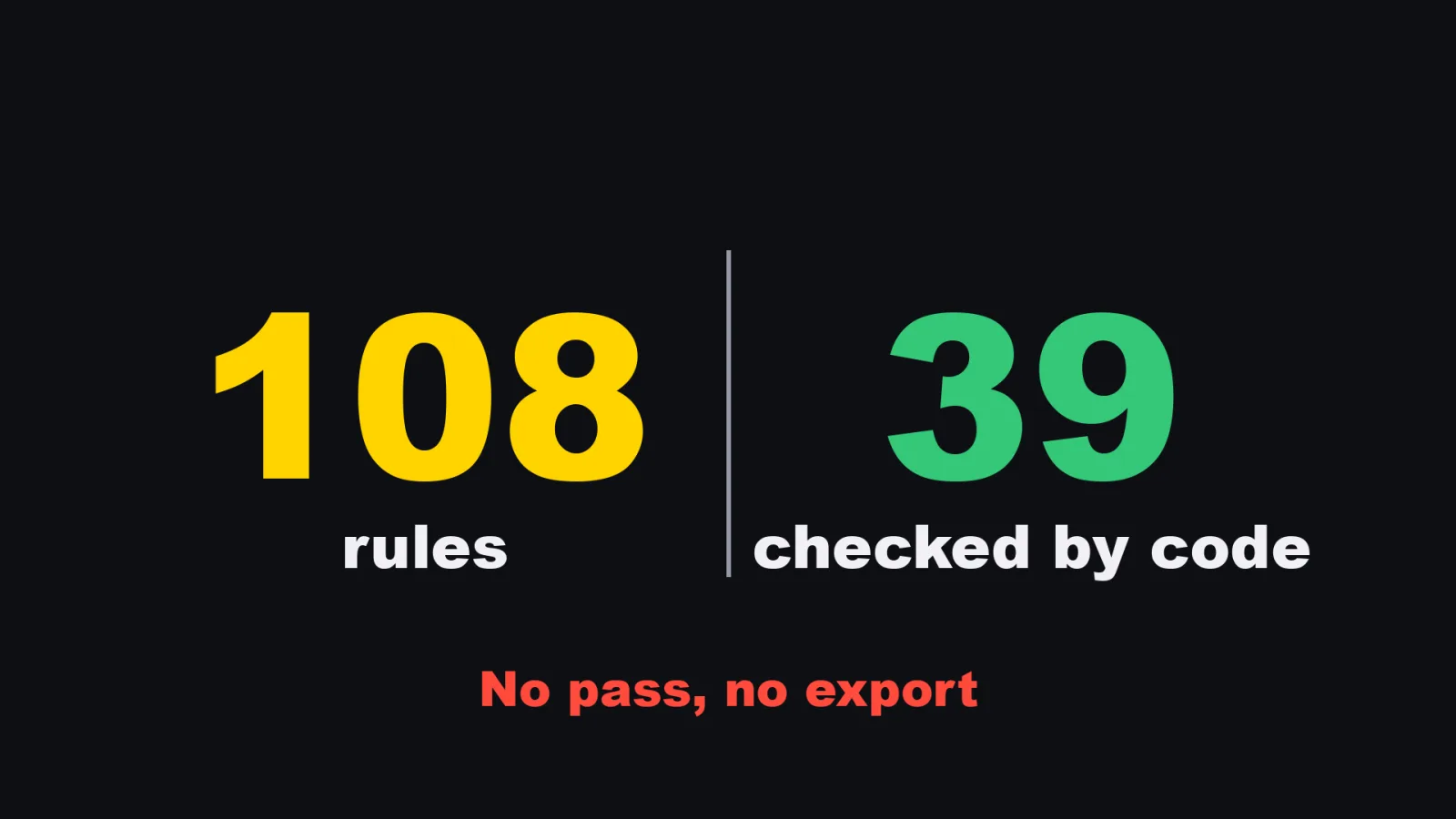
| The rule book right now | Count |
|---|---|
| Rules in total | 108 |
| Checked by code | 39 |
| Not checked by code | 69 |
If a picture shows a laptop with two lids, the video simply won't export.
Catch 3: Japanese words that look the same
Two of my channels are in Japanese.
Japanese has words that are written the same but read differently. The voice model guesses. And it guesses wrong, out loud, in front of everyone.

So now there is a reading dictionary.
- I flag a word on the review screen.
- It goes into the dictionary.
- From then on, the voice reads it right.
Catch 4: automation can post to the wrong place, fast

Once, a short meant for one of my Japanese channels went up on a different account. The app was still logged into the wrong one.
Now, before it taps post:
- It opens the profile.
- It reads the account name.
- If it doesn't match, it stops.
Every single time.
Hashtags can bite you too. One of my videos was taken down on TikTok because of a single hashtag about automated trading.
Catch 5: AI can't tell you what is worth making
This is the big one.

A full script was written for a video I had already planned. I read it and killed the whole topic. The title and the story didn't match. It just wasn't worth anyone's time.
AI is great at making the thing. Deciding which thing, and saying no, is still my job.
What does work? On one of my Japanese channels, topics now come from the blog posts people read the most. Readers already told us what they want. Claude just follows that list.
The view numbers those other videos skip
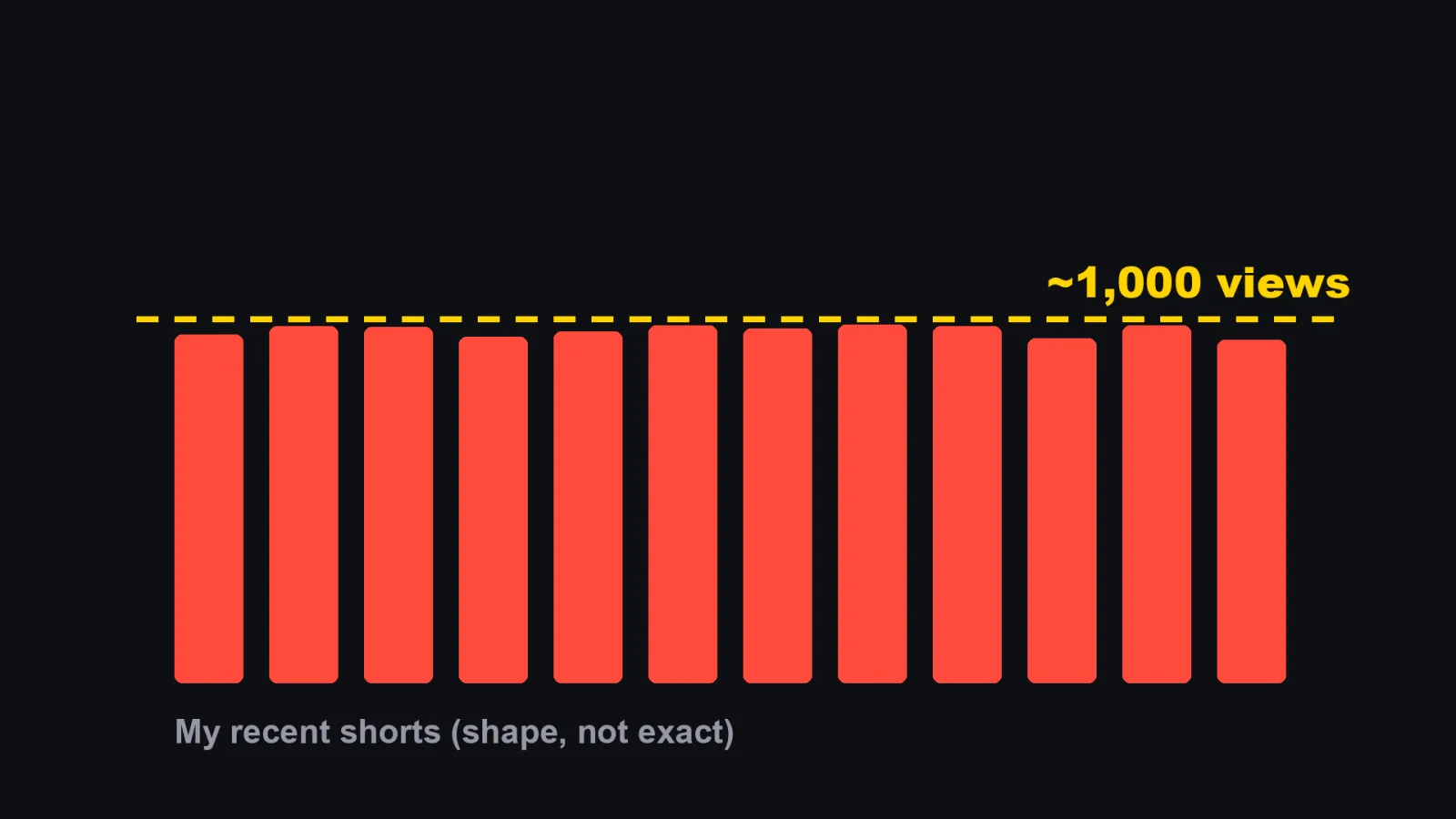
My shorts pass a thousand views every time. And then they stop. Not ten thousand. Not a million. A thousand, and a bit.
So I measured where people leave, second by second.
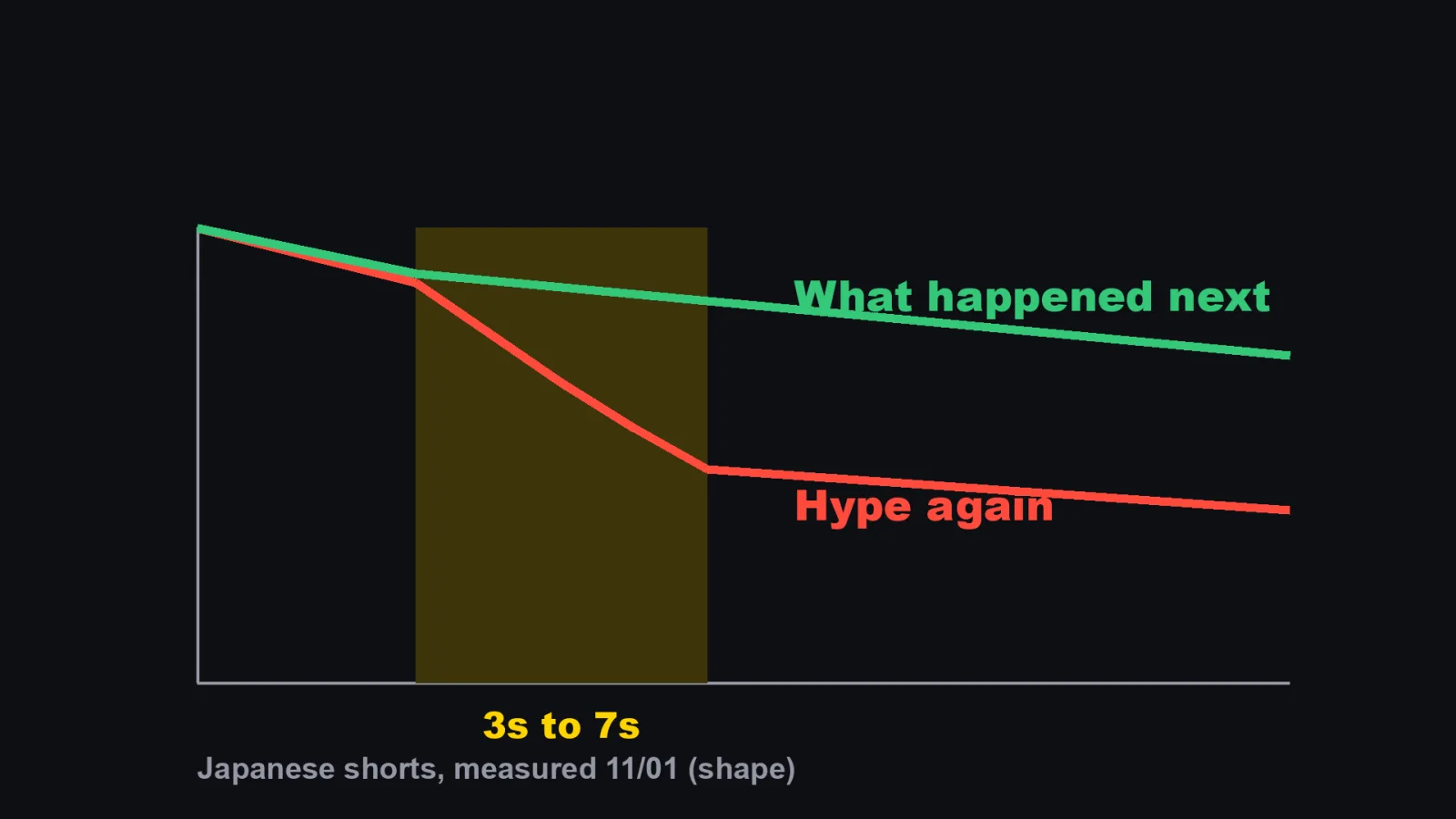
| What I measured on my Japanese shorts | Result |
|---|---|
| Where the biggest drop is | Between second 3 and second 7, right after the title |
| If the second line hypes the same thing again | Around 10% of people leave every second |
| If the second line moves the story forward | They stay |

Automation got me volume. It did not get me an audience. Those are two different things.
So why do it at all?

Because a new channel needs tries. YouTube has to learn who to show you to, and it learns from what you post.
More tries at the same quality means more chances to hit. That is the whole bet.
Not that AI makes money. That AI lets one person keep trying.
What AI does, what I do
| AI does | I do |
|---|---|
| Finds what people search this week | Decide which topic is worth making |
| Writes the first draft of the script | Mark it up and say OK, or kill it |
| Reads it out loud, draws every scene | Flag wrong readings and wrong pictures |
| Checks drawings with a second and third model | Turn each mistake into a rule |
| Runs 39 code checks before export | Watch the finished video once |
| Posts on schedule from a real iPhone | Decide where the line is |
A checklist if you hand your channel to AI
- Do your topics come from something measured (search results with view counts, or your most read posts), not a guess?
- Does a person approve every script before anything is made?
- When you correct the AI, do you write the correction down as a rule?
- Have you turned the rules you can into code that blocks the export?
- Does a second model check every image for things like logos and hands?
- Does a person watch each finished video once before it posts?
- Does the posting step read the account name before it taps post?
- Do you check hashtags before they go out?
- Have you looked at where viewers leave, second by second, especially right after the title?
- Do you know how many hours a day you can spend reviewing? That is your real limit.
- Could you answer Google's "Who, How, and Why" questions about your content?
If you are thinking about handing your channel to AI, here is what I would tell you. Let it do the work. Keep the judgement.
Claude Code makes the videos. It doesn't make anyone watch them.
Sources: Google Search Central blog, "What web creators should know about our March 2024 core update and new spam policies" (March 5, 2024). Google Search Central blog, "Google Search's guidance about AI-generated content" (February 8, 2023). Google Search Central, "Creating helpful, reliable, people-first content" (the "Who, How, and Why" section). All read November 5, 2026. View numbers are from my own YouTube Studio. Review and rule counts are from my own workflow when I made the video.