 Hisashi Space
November 7, 2026 · 17 min read
When Will Anthropic Run Out of Money? I Read the S-1, Then Looked at My Claude Code Weekly Limit

When will Anthropic run out of money? I read the S-1 to find out.
Anthropic filed an amended S-1 for its IPO on November 2, 2026. It is a long document, and the numbers that answer this question are spread across four or five sections. I pulled them out, checked each one against the filing on SEC EDGAR, and put the page number next to it.
I made a video about it. This article has what the video has no room for: the tables themselves, the page each number comes from, what the worst case calculation leaves out, what Anthropic's own help pages say about usage limits, and the exact way I set up my work so a limit does not stop it for long.

The short version
- At today's pace, Anthropic is not burning through its cash. In the first nine months of 2026, its operations brought in $6.6 billion more cash than they used.
- The $104.0 billion loss in the headlines is mostly a change in the value of notes on paper. No cash left the company for it.
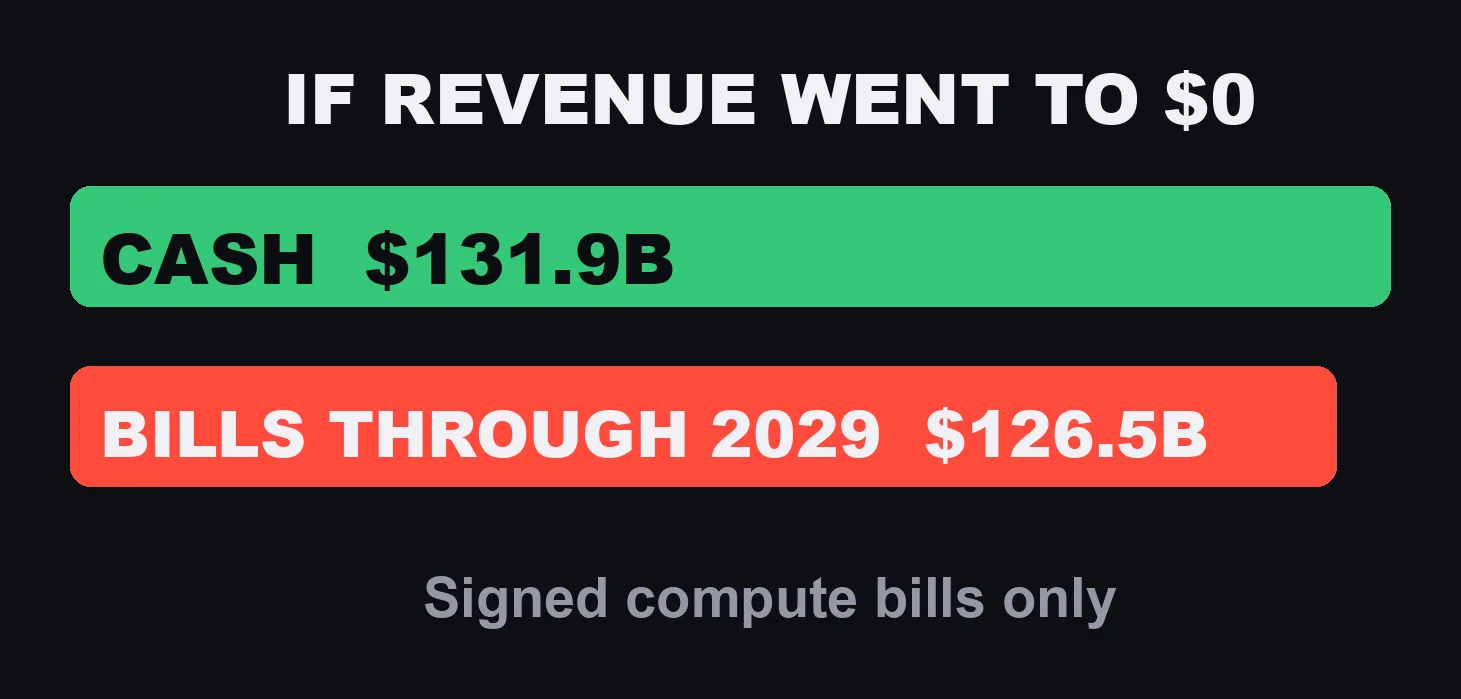
- Worst case: if revenue went to zero tomorrow, $131.9 billion of cash and short-term investments would cover the compute bills in the contract table through the end of 2029. That is about three years.
- That worst case counts only one table. The filing lists more commitments outside it. I show both below.
- All of these numbers are before the IPO money. The filing leaves that amount blank.
- For people who use Claude, the risk that matters is not bankruptcy. It is that usage limits keep changing. The filing says so in one sentence.
- I hit the Claude Code weekly limit every week. Three habits keep my work moving: make every job easy to restart, keep a second AI ready, and know your two limits.
I have run my own company in Japan for 22 years. Today, Claude Code does most of the work. Every number about Anthropic below comes from the filing itself. Every number about my own work comes from my own logs. This is about whether the tool keeps working, not about the stock.
Will Anthropic run out of money? What the S-1 says
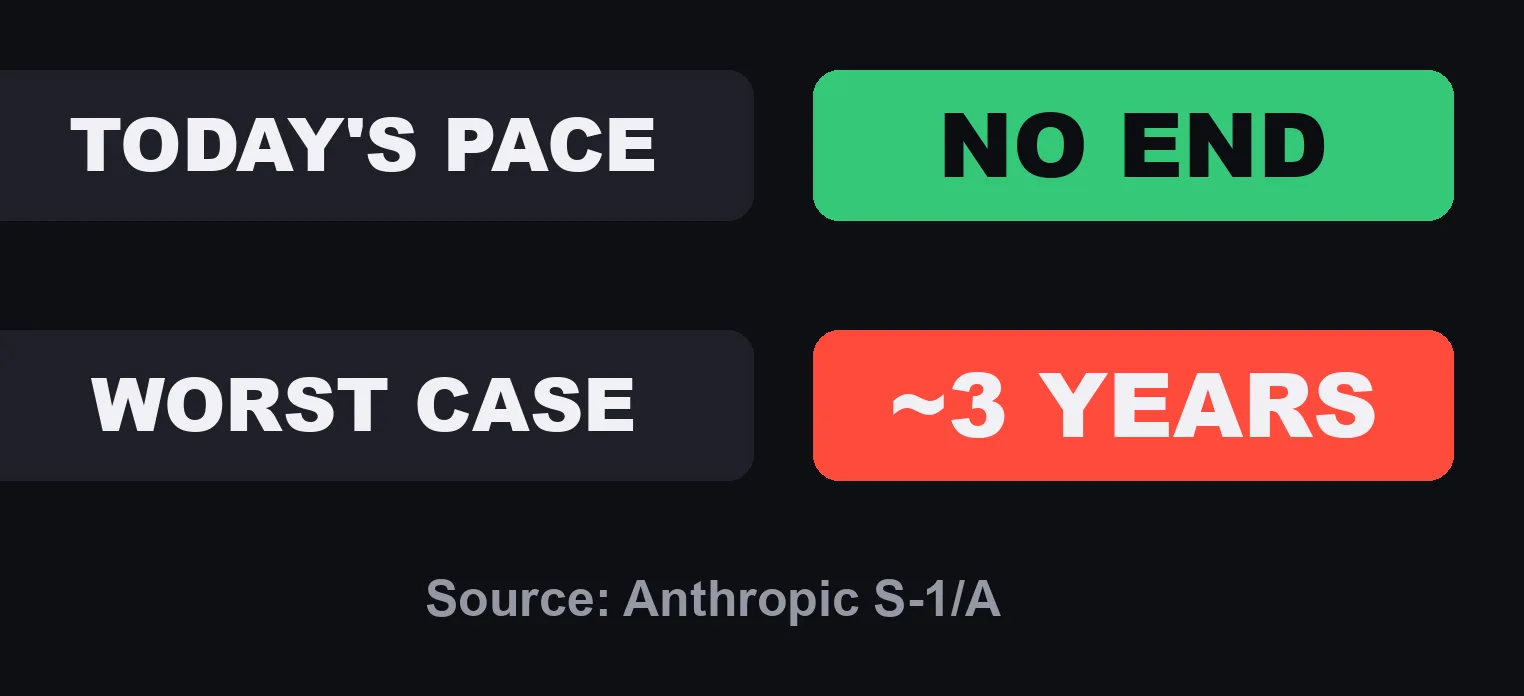
There are two different questions hiding in "when will Anthropic run out of money?"
The first is about today's pace. If the business keeps doing what it is doing, is the cash going down?
The second is the worst case. If customers stopped paying tomorrow, how long could Anthropic keep paying for what it has already signed?
These are the sections of the S-1/A that answer them:
| What I looked for | Section of the S-1/A | Page |
|---|---|---|
| Cash and short-term investments | Liquidity and Capital Resources | 165 |
| Cash coming in and going out | Cash Flows (table) | 173 |
| The investing line, item by item | Consolidated Statements of Cash Flows | F-13 |
| The $104.0 billion net loss | Risk Factors; Adjusted Net Income (Loss) reconciliation | 66, 160 |
| IPO money | Use of Proceeds | 126 |
| Bills already signed, by year | Contractual Obligations (table) | 174 |
| Usage limits | Risk Factors | 31 |
| Demand for compute | Risk Factors; Management's Discussion and Analysis | 32, 143 |
The filing is Anthropic, PBC, Form S-1/A (Amendment No. 1), filed November 2, 2026, Registration No. 333-299633.
Anthropic cash burn vs revenue: the cash flow table
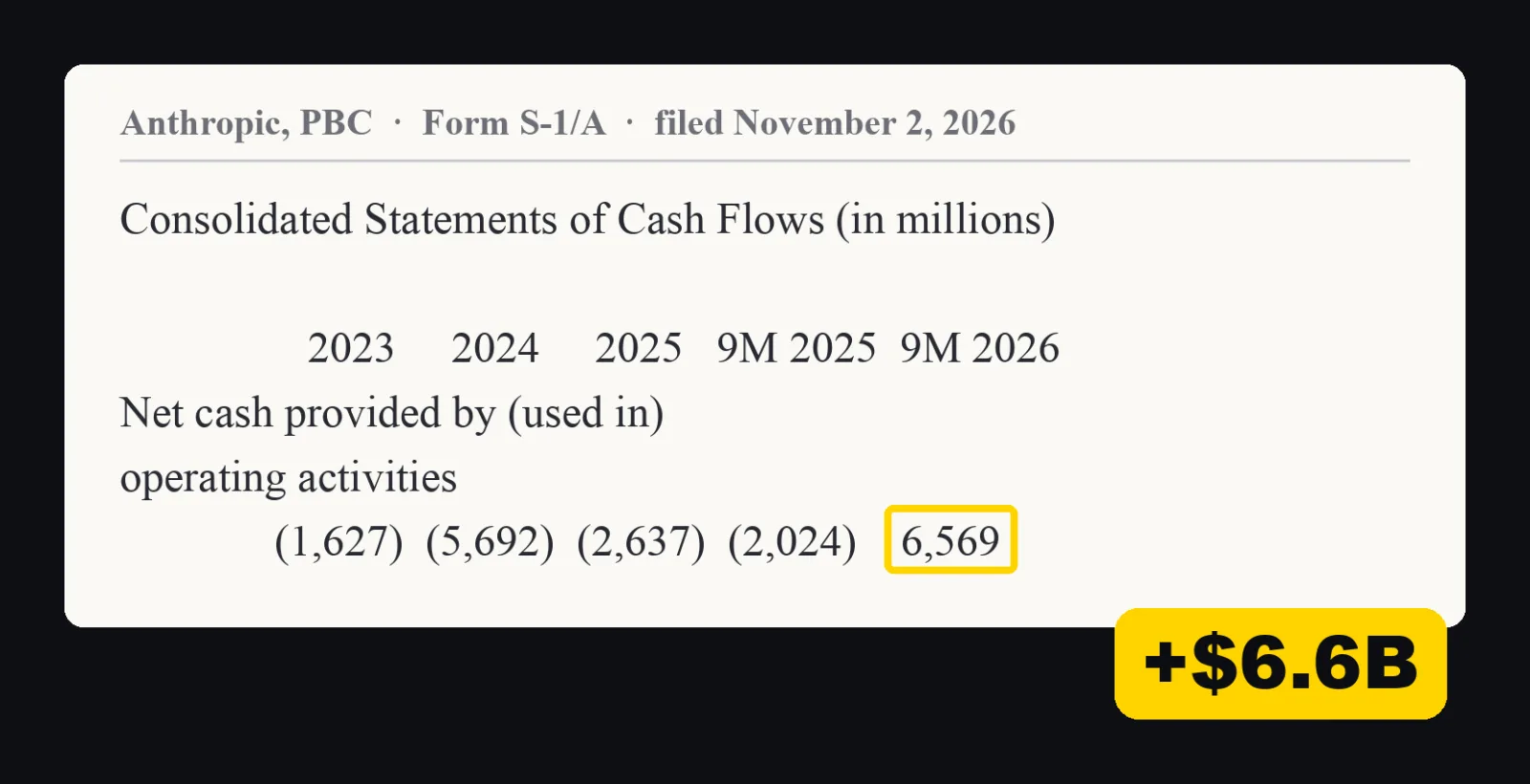
This is the summary of cash flows on page 173, in millions of dollars:
| 2023 | 2024 | 2025 | Jan to Sep 2025 | Jan to Sep 2026 | |
|---|---|---|---|---|---|
| Operating activities | (1,627) | (5,692) | (2,637) | (2,024) | 6,569 |
| Investing activities | (2) | (22) | (3,077) | (2,007) | (36,546) |
| Financing activities | 2,320 | 7,248 | 19,960 | 18,508 | 110,735 |
Numbers in parentheses are cash going out.
For three years, operations used cash. In the first nine months of 2026, they brought in $6.6 billion more than they used. That is the line that answers the first question.
Two things are worth checking before you trust it.
First, does the build-out eat that $6.6 billion? On page F-13, the investing section shows purchases of property and equipment of $925 million and prepayments for leased assets and equipment of $1,955 million for the same nine months. Take both out of $6,569 million, and $3,689 million is still left. Still positive.
Second, why is investing at minus $36.5 billion? On the same page, $40,318 million of it is "purchases of short-term investments", with $6,900 million coming back from sales and maturities. That is cash moved from the bank account into Treasury securities, commercial paper and similar. It is still Anthropic's money. It just changed where it sits.
The financing line is where the money came from: $110.7 billion, from issuing preferred stock (page 173).
So at today's pace, the cash is not going down. There is no date on which it runs out, because nothing is running out.
The $104 billion loss in the headlines
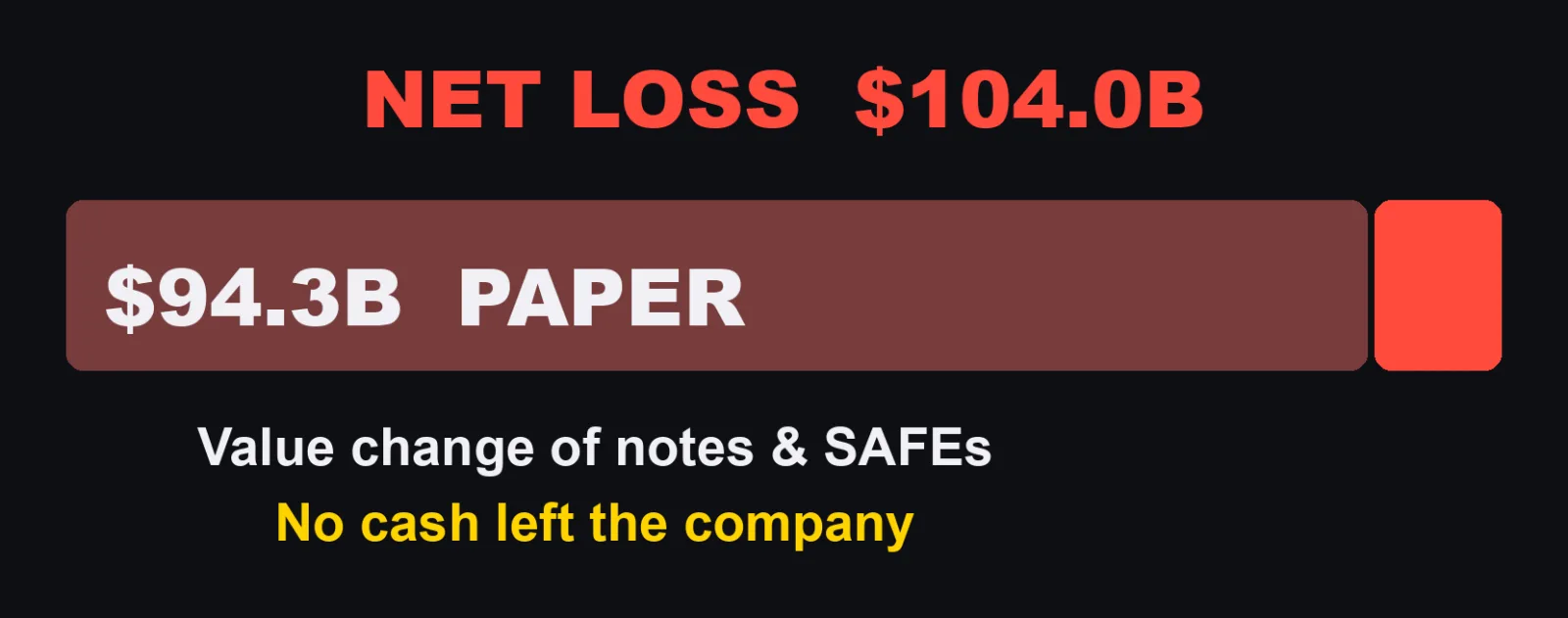
Then what about the loss? Page 66 says Anthropic had net losses of $1.5 billion, $8.3 billion and $42.0 billion in 2023, 2024 and 2025, and $104.0 billion in the first nine months of 2026.
The same paragraph says what most of it is. $94.3 billion of the 2026 loss is "changes in fair value of convertible notes, derivative liabilities, and SAFEs", driven by "an increase in our enterprise valuation". When the company becomes worth more, the notes it owes become worth more, and the accounting records that as a loss. No cash leaves the company for it.
The reconciliation on page 160 takes out every non-cash item, in millions of dollars:
| Jan to Sep 2026 | Amount |
|---|---|
| Net loss | (104,039) |
| Stock-based compensation | 3,255 |
| Non-cash charitable contributions | 2,086 |
| Change in fair value of convertible notes, derivative liabilities, and SAFEs | 94,324 |
| Change in fair value of certain mark-to-market financial instruments | 10,277 |
| Income tax effects and adjustments | (312) |
| Adjusted Net Income (Loss) | 5,591 |
Adjusted Net Income (Loss) is Anthropic's own measure, not a standard accounting one. But it lines up with the cash flow table: the business is bringing in more than it spends.
Before the IPO money
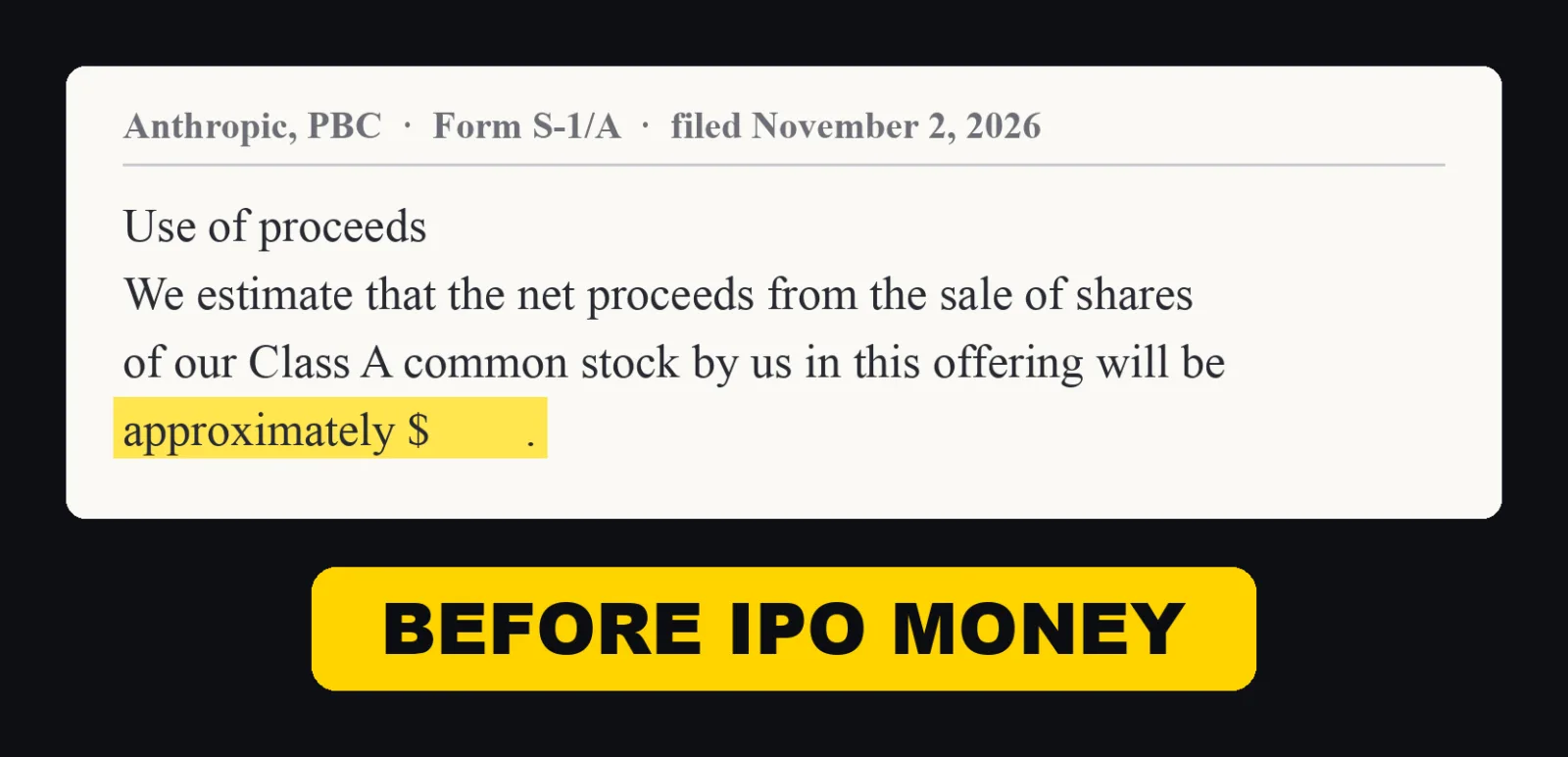
Every number so far is before the IPO. On page 126, Use of Proceeds says the net proceeds "will be approximately $ ", and the space after the dollar sign is empty. The price per share is blank too. So nobody can add the IPO money yet, and I don't.
The filing does list other money available, as of September 30, 2026 (pages 140 and 165):
| Source | Amount |
|---|---|
| Cash and cash equivalents | $95.6B |
| Short-term investments | $36.3B |
| Unused A&R Credit Facility | $14.8B |
| Liquidity, as the filing totals it | $146.6B |
| Financing capacity under NPAs (convertible notes), up to | $77.0B |
| Equity commitments from strategic partners, up to | $5.0B |
For the worst case below, I use only the first two: $131.9 billion. No credit line, no new notes, no IPO.
The filing's own statement is on page 166: existing cash, short-term investments, cash from sales and the credit facility "will be sufficient" for working capital, lease payments and capital expenditures "for at least the next 12 months from the date of this prospectus".
If revenue went to zero: the contractual obligations table
Now the worst case. Suppose every customer stopped paying tomorrow. What has Anthropic already signed?
This is the contractual obligations table on page 174, as of September 30, 2026, in millions of dollars:
| Total | 2026 (Oct to Dec) | 2027 | 2028 | 2029 | 2030 | Thereafter | |
|---|---|---|---|---|---|---|---|
| Operating leases | 4,224 | 57 | 303 | 462 | 445 | 466 | 2,491 |
| Finance leases | 1,950 | 121 | 438 | 422 | 406 | 390 | 173 |
| Purchase commitments | 313,819 | 5,053 | 28,424 | 43,473 | 46,901 | 44,214 | 145,754 |
| Total | 319,993 | 5,231 | 29,165 | 44,357 | 47,752 | 45,070 | 148,418 |
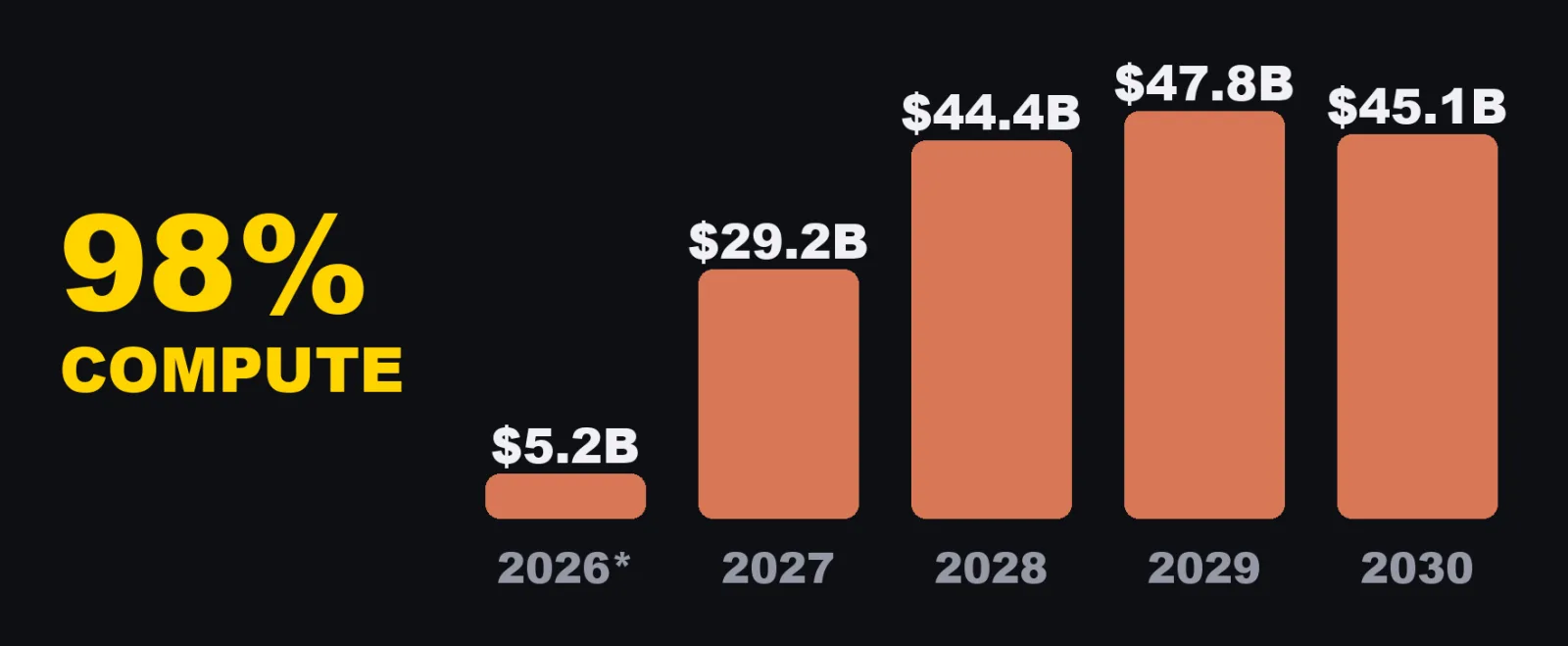
Purchase commitments are 98% of the total. The footnote says they are mainly "CSP hosting and other third-party infrastructure service agreements": in plain words, the servers that run Claude.
Now line those bills up against the $131.9 billion:
| By the end of | Bills paid so far | Cash and short-term investments left |
|---|---|---|
| 2026 | $5.2B | $126.7B |
| 2027 | $34.4B | $97.5B |
| 2028 | $78.8B | $53.1B |
| 2029 | $126.5B | $5.4B |
| 2030 | $171.6B | Not enough |
The $5.4 billion left at the end of 2029 covers about 1.4 months of the 2030 bills. From November 2026, that is about three years. That is where "about three years" in the video comes from.
This calculation leaves out two things on purpose, and they push in opposite directions. It ignores salaries and every other cost, which makes it look better than it is. It also assumes revenue drops to zero, which no business with $6.6 billion of operating cash flow does overnight.
What the table leaves out
There is a third thing the video had no room for. The table on page 174 counts only commitments that are fixed, non-cancelable and longer than one year. The paragraphs around it list more:
| Outside the table (page 174 and 175) | Amount |
|---|---|
| Short-term commitments, cancelable within a year or a year or less left | about $17.4B |
| Leases signed but not yet started, mostly starting 2026 to 2028 | about $451.2B |
| Commitments signed after September 30, 2026 | about $100.2B |
| Short-term agreements signed after September 30, 2026 | about $6.6B |
| Arrangements with no fixed dollar amount, the filing's estimate | $150B to $175B |
All of it together, table included, is about $895.4 billion (page 174). About $447.5 billion of that is expected before the end of 2030 (page 140). About $69.8 billion is due in the 12 months after September 30, 2026 (page 175). And about $213.8 billion of the total can be terminated, or depends on conditions such as the other side securing financing, facilities or approvals (page 174).
So if you count everything, a zero revenue Anthropic would not reach 2030 on today's cash. What the filing does show is that the next 12 months, $69.8 billion, are covered by cash and short-term investments almost twice. After that, the filing says how it plans to pay, on page 140: "We intend to fund these investments through the revenue we generate and the capital that we raise."
So the answer has two parts. At today's pace, Anthropic is not running out of money. In the worst case, how long the cash lasts depends on which commitments you count, and the filing gives you both.
Claude usage limits: the real risk
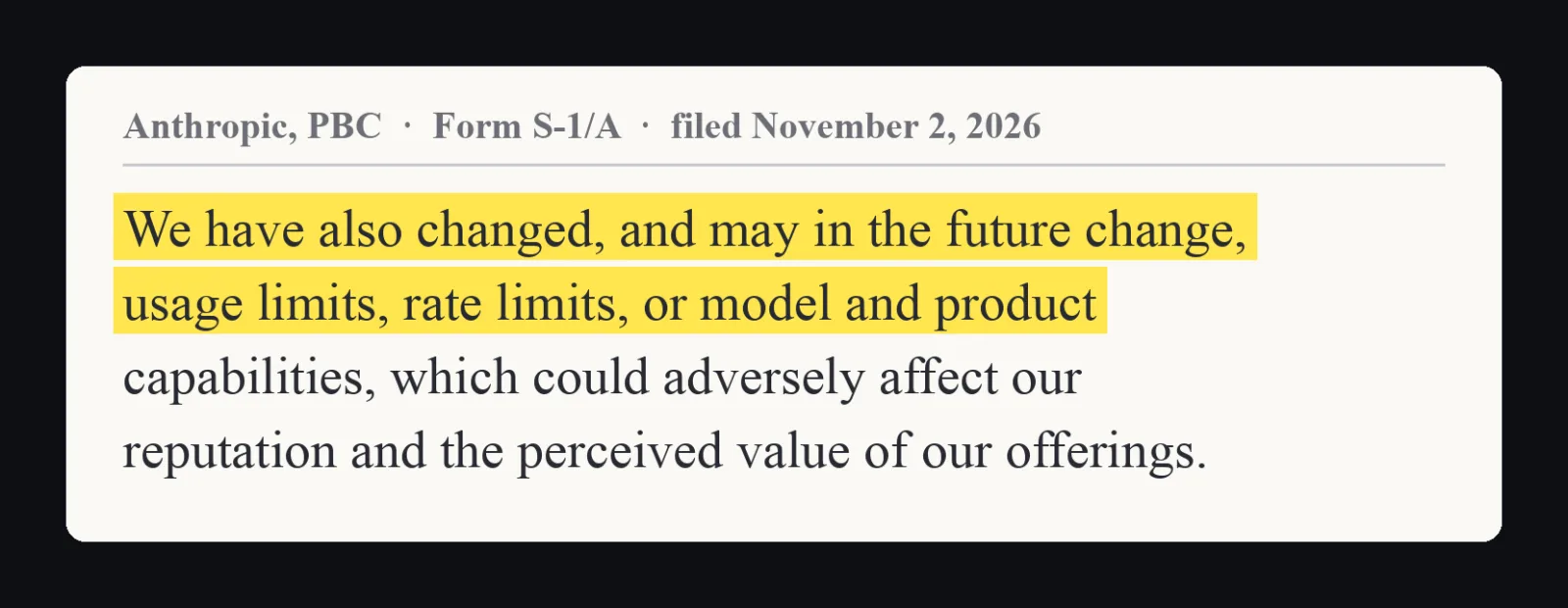
I use Claude Code every day, so one sentence in the filing mattered more to me than any loss. It is in Risk Factors, on page 31:
"We have also changed, and may in the future change, usage limits, rate limits, or model and product capabilities, which could adversely affect our reputation and the perceived value of our offerings."

That's the real risk. Not that Claude disappears. That Claude tells you to wait, right when you need it most.
If you work alone or with a small team, it hits harder. When Claude stops, nobody else picks up the work.
Hitting the Claude Code weekly limit
I know, because it keeps happening to me.
On a normal day, about forty Claude Code sessions run at the same time. They write articles for my product sites, fix code, and make videos like this one. A job board I run publishes about two hundred blog articles a day. My three channels put out around twelve videos a day. Claude Code is in the middle of all of it.
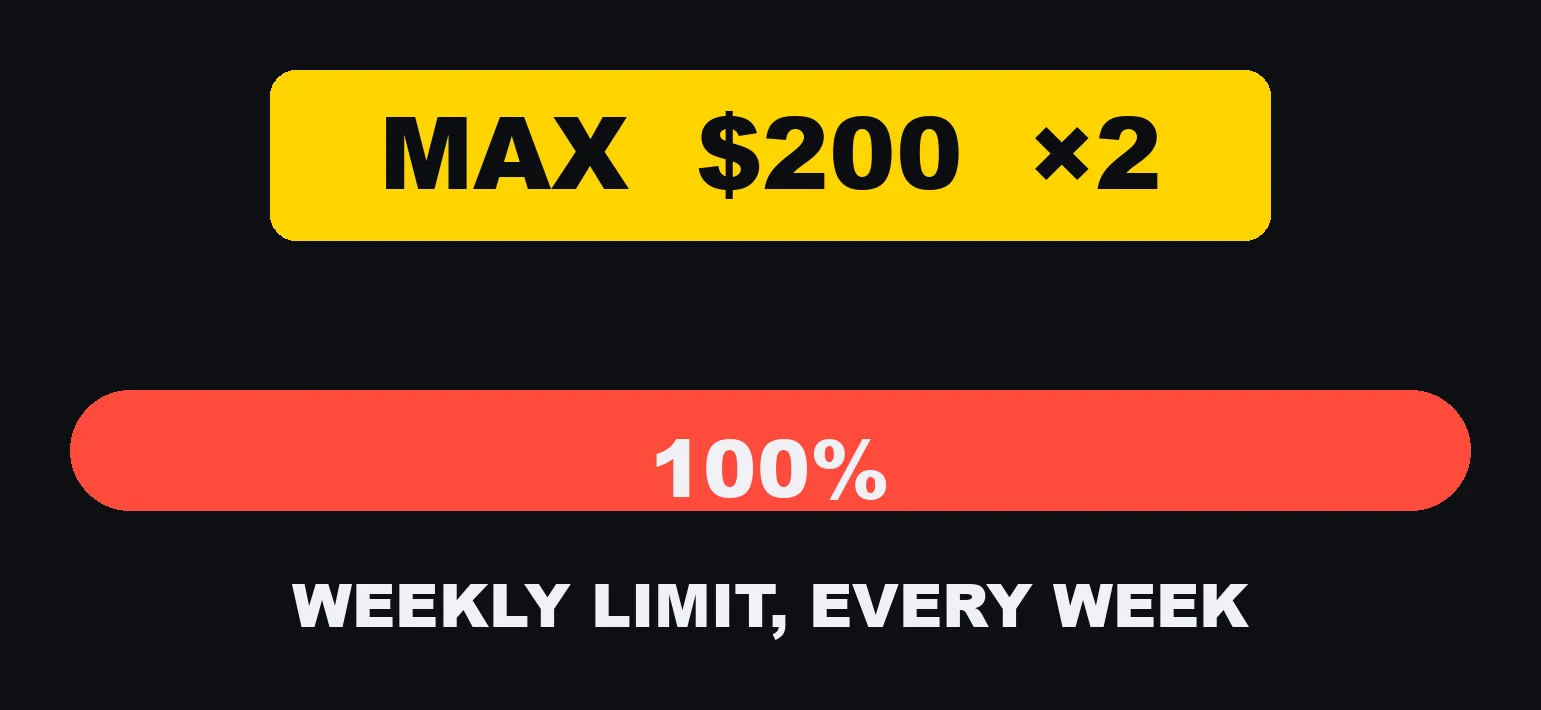
I pay for two Max plans, $200 a month each. I use up the weekly limit every single week, and some weeks it is still not enough. So I don't guess what a limit feels like. I hit them.
The worst night
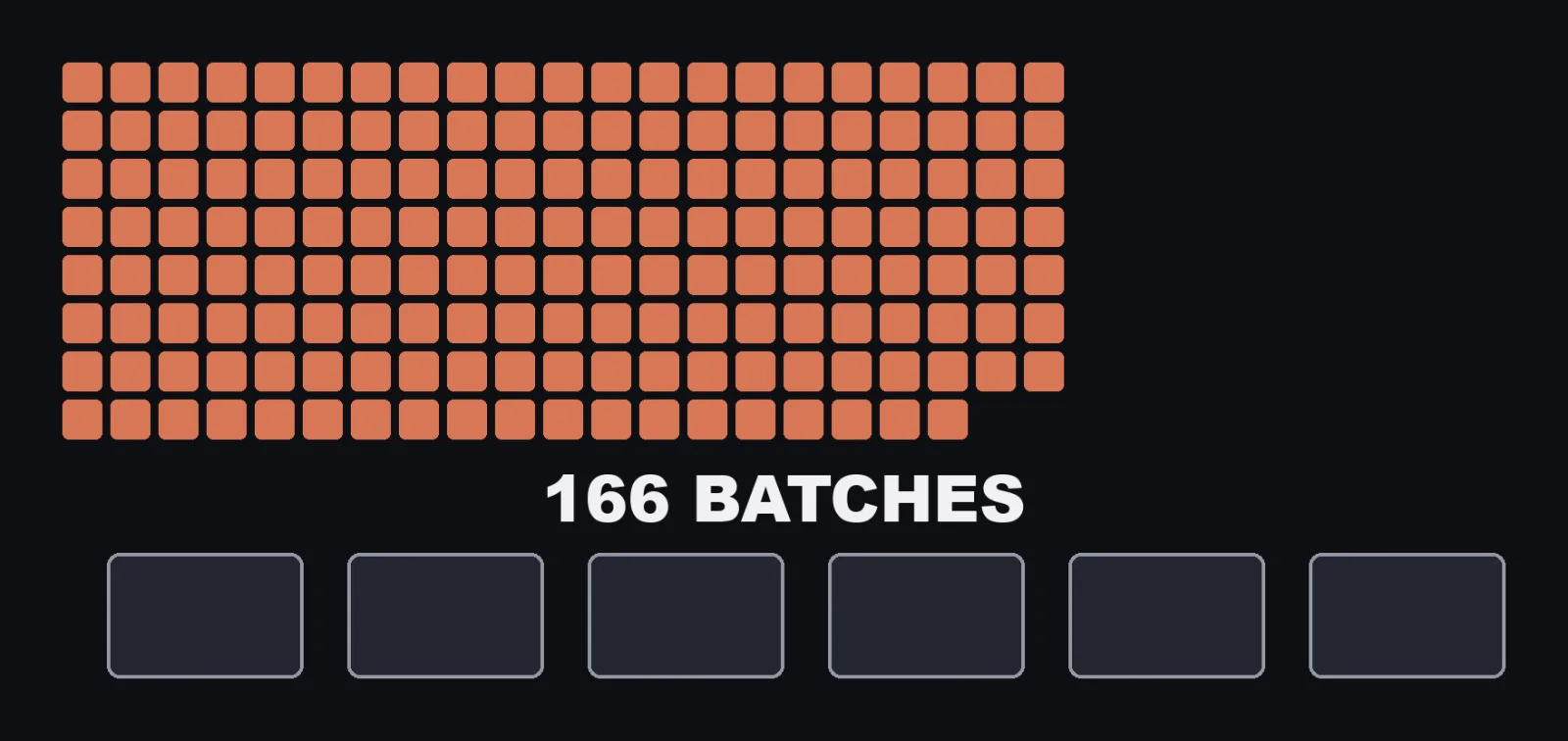
I was rewriting the articles on all my product sites. One hundred sixty-six batches, handed out to many Claude sessions working at once.
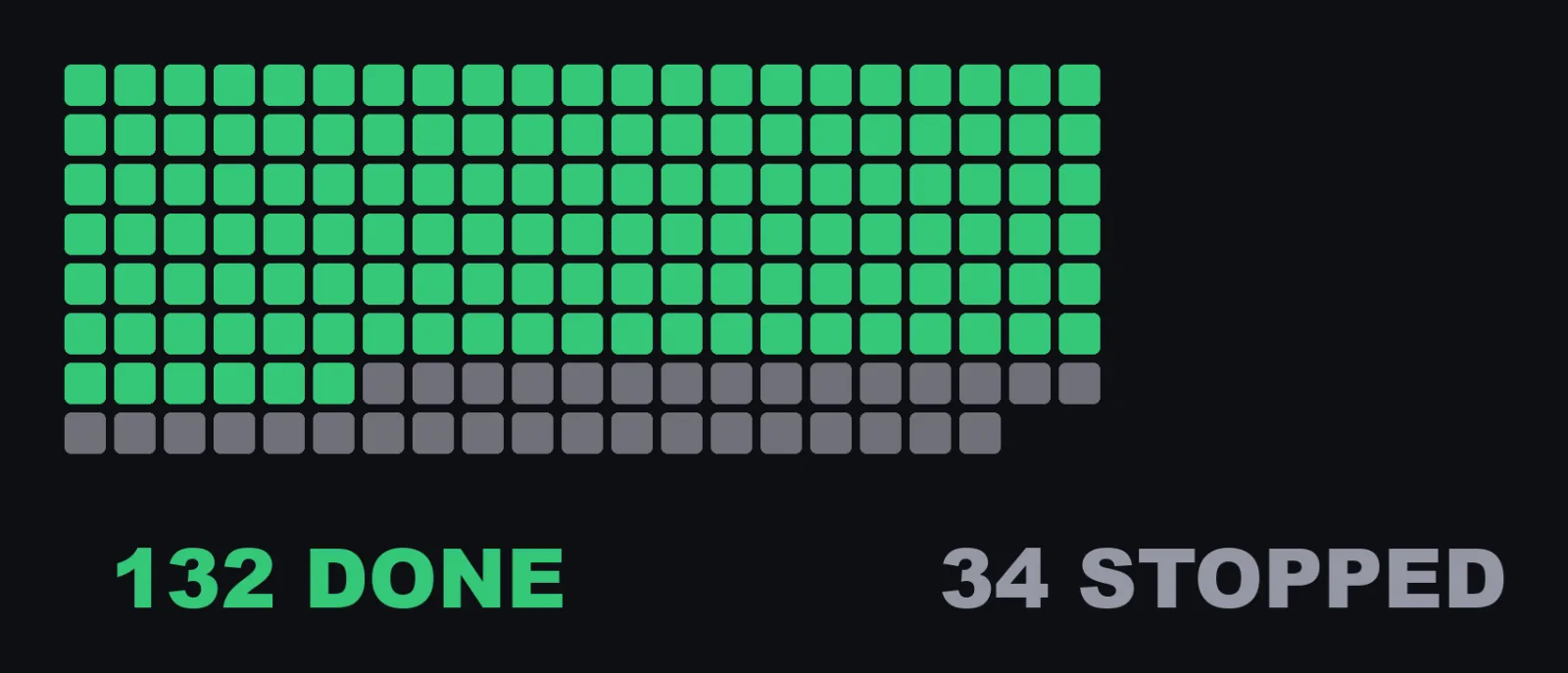
At 1:50 in the morning, the weekly limit hit. 132 batches were done. 34 stopped in the middle of writing.

Not finished. Not untouched. Half-written. Some files were half new, half old.
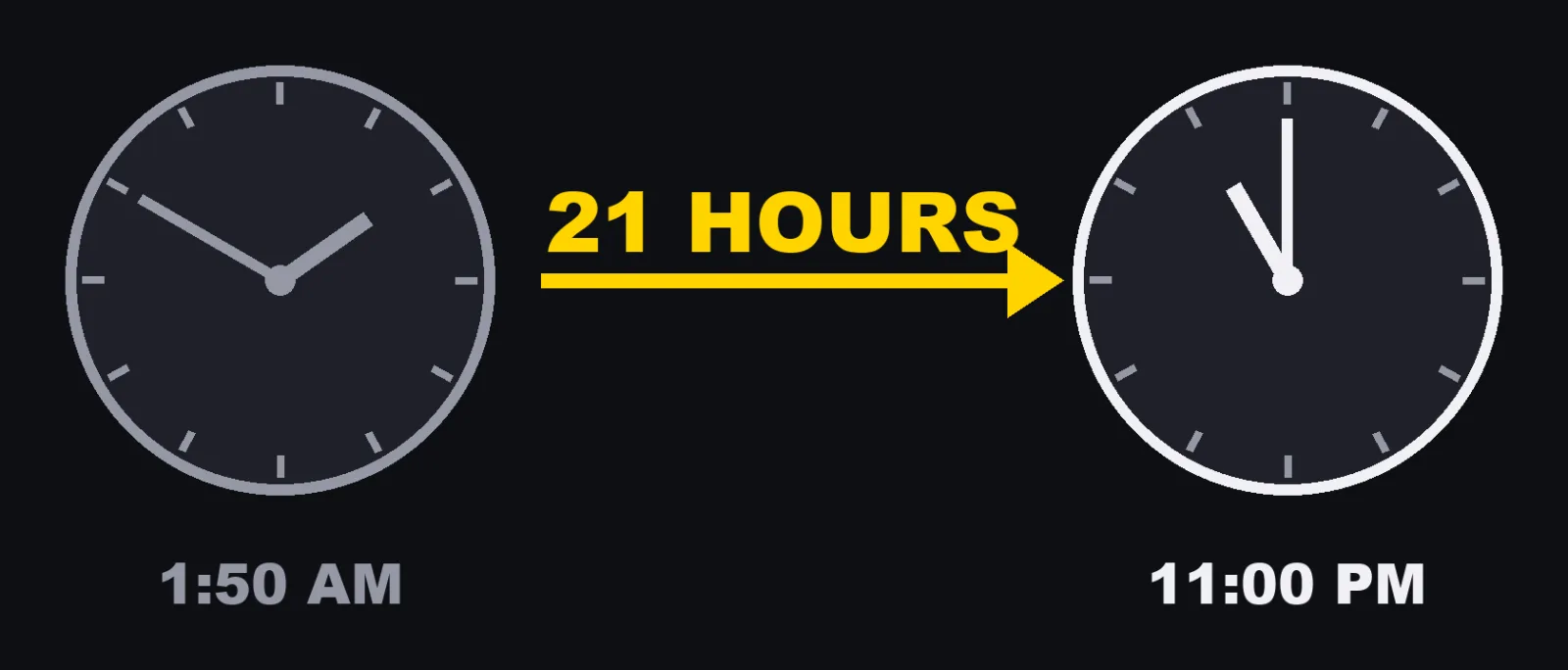
The limit didn't come back until 11 that night. About twenty-one hours of waiting. For those 34 jobs, my company did nothing for almost a full day.
When it came back, I sent all 34 a message: continue from where you stopped. Then I checked every article to find the half-written ones. Nothing was lost in the end.
But that night taught me something. The limit wasn't the problem. The way I had set up the work was. The limit always comes back eventually. What matters is whether your work can start again the minute it does.
Three more times
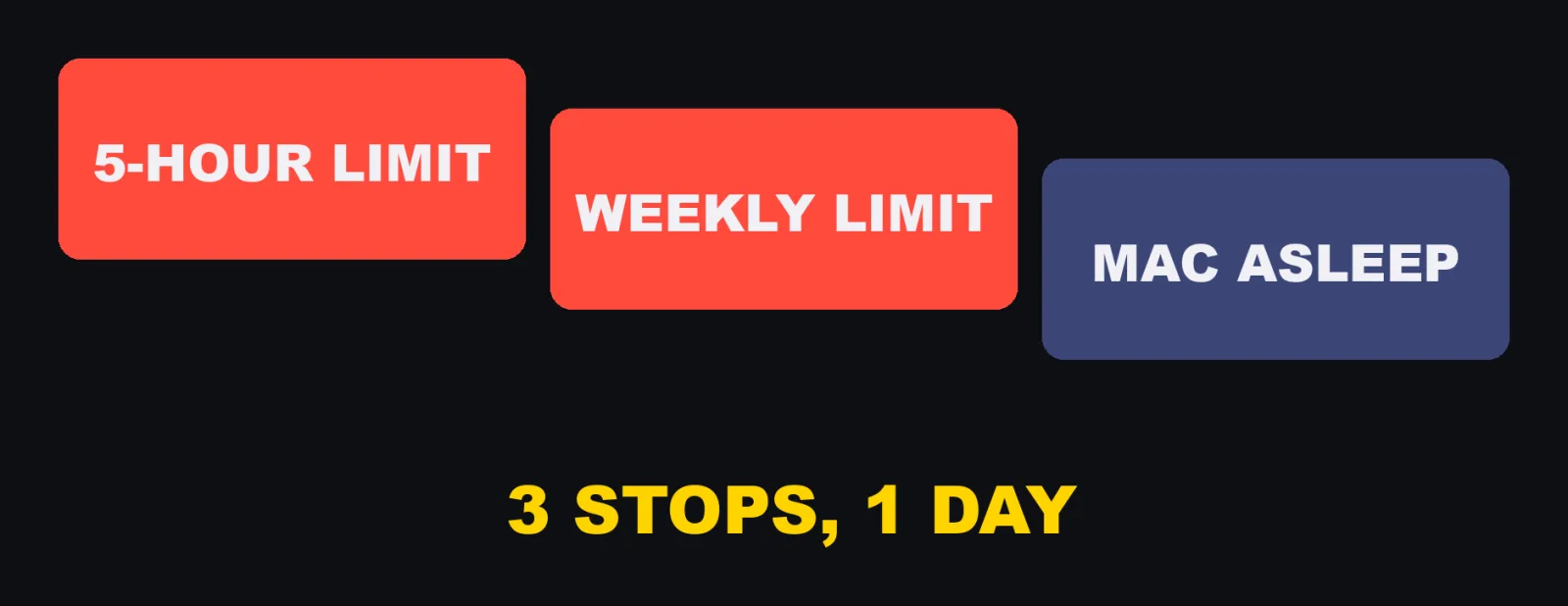
| When | What stopped | What it cost |
|---|---|---|
| Five days after that night | Another account hit its weekly limit in the evening | My work sat for about four hours, waiting, when it didn't have to |
| Another day | One run stopped three times: the five-hour limit, then the weekly limit, then my Mac went to sleep and every session died at once | Nothing told me. The work just went quiet |
| Another time | Six jobs told me I had hit my weekly limit | I tried again a few minutes later, and they went through |
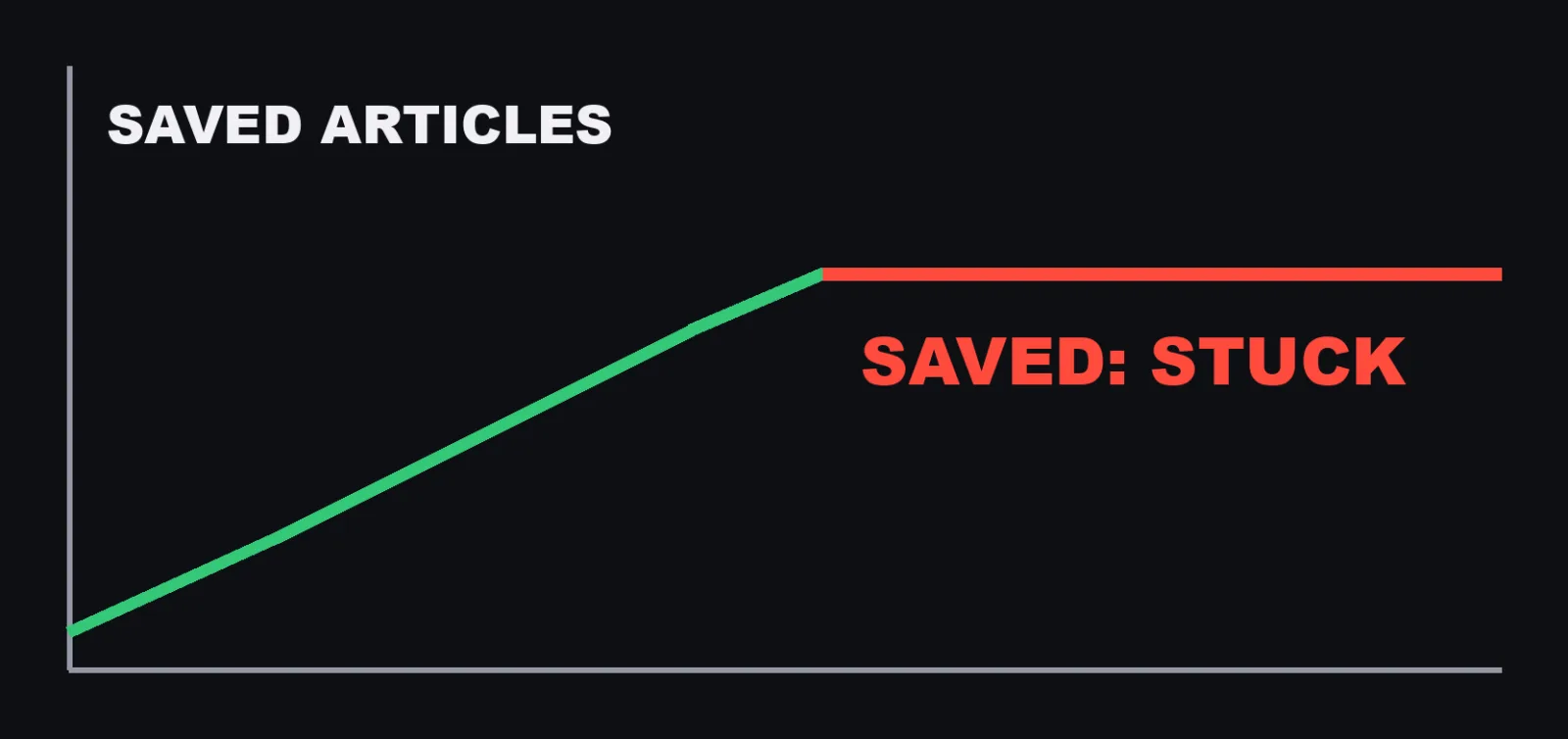
On the day of the three stops, I only noticed because the number of saved articles stopped going up.
Why Claude usage limits keep changing
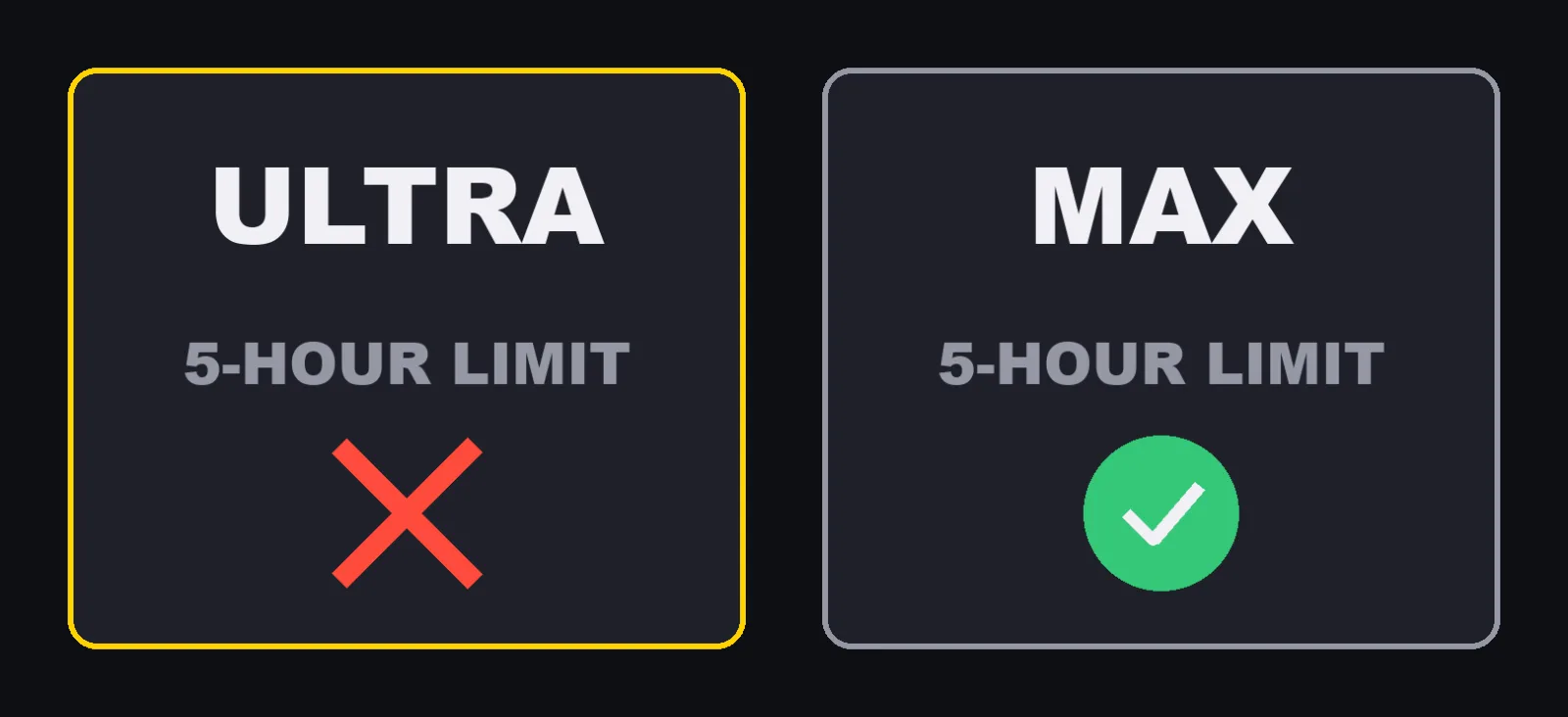
The limits themselves keep moving. The newest plan, Ultra, dropped the five-hour limit. Max kept it.
This is what Anthropic's own pages say today (claude.com/pricing and the Claude Help Center, read November 7, 2026):
| Plan | Five-hour limit | Weekly limit |
|---|---|---|
| Pro | Yes | Yes |
| Max | Yes, 5x Pro usage | Yes, 5x Pro usage, plus a separate weekly limit for Fable |
| Ultra | No five-hour limit for verified accounts | Yes, 10x Pro usage, plus a separate weekly limit for Fable |
A few more facts from the same help pages that change how you plan:
- The limits are shared across Claude and Claude Code. Chatting in the app uses the same allowance your coding sessions need.
- The weekly limit resets at a fixed time assigned to your account. You can see it under Settings > Usage.
- In Claude Code,
/statusshows your remaining allocation. - You get warning messages as you approach any limit.
- Usage credits can keep you going past a limit: after the five-hour limit on Pro, and after the five-hour or weekly limits on Max.
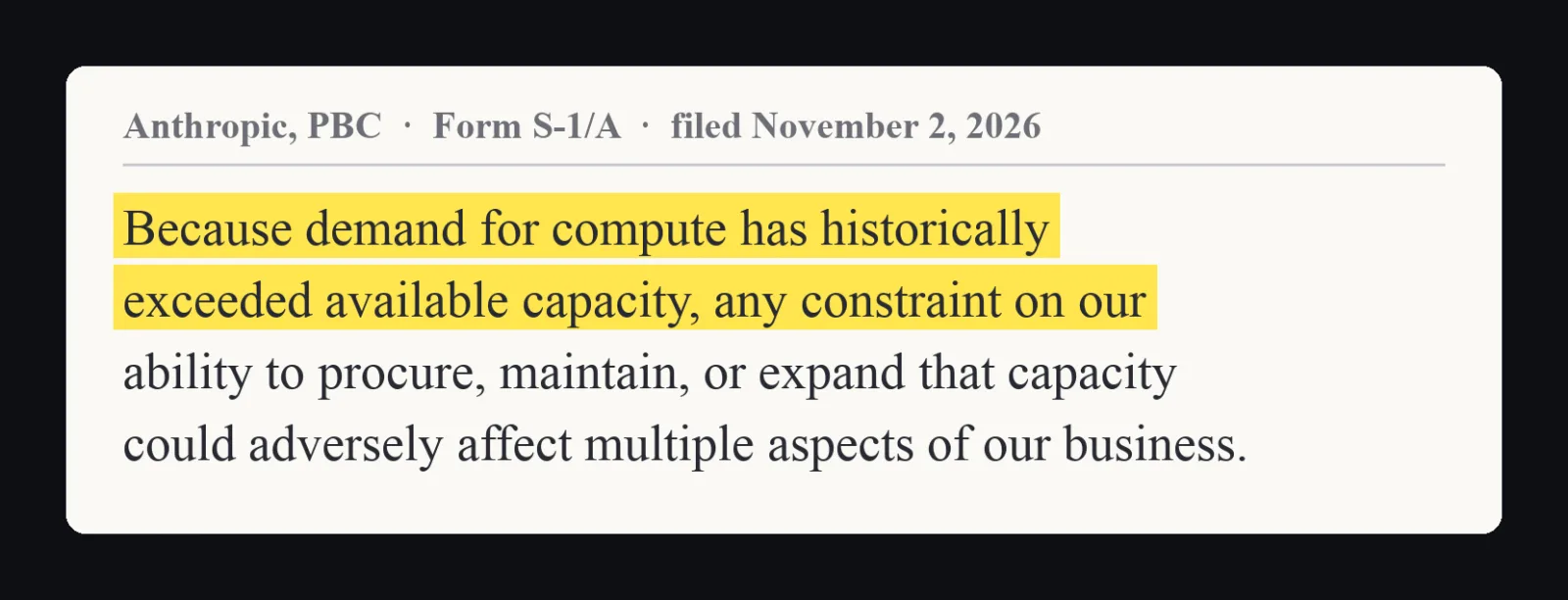
Why do they keep changing? The same filing answers it, twice. Page 32: "Because demand for compute has historically exceeded available capacity, any constraint on our ability to procure, maintain, or expand that capacity could adversely affect multiple aspects of our business simultaneously." Page 143: "We have historically operated in a compute-constrained environment in which demand for compute has exceeded the supply available to us."
And page 147 says how subscriptions work: they "are subject to usage limits that reset over short periods".
So when lots of people want Claude at the same time, someone waits. Sometimes that someone is you.
The more of your work you put on Claude, the more often you'll meet that limit. I meet it every week. You might meet it once a month. But you will meet it.
How to work around Claude Code limits

So here's what I'd do, if Claude Code runs a big part of your work. Three things. Each one comes from a night I lost time.
None of this needs a big team. It's a few lines in how you ask Claude, and a backup you've already tried.
1. Make every job easy to restart
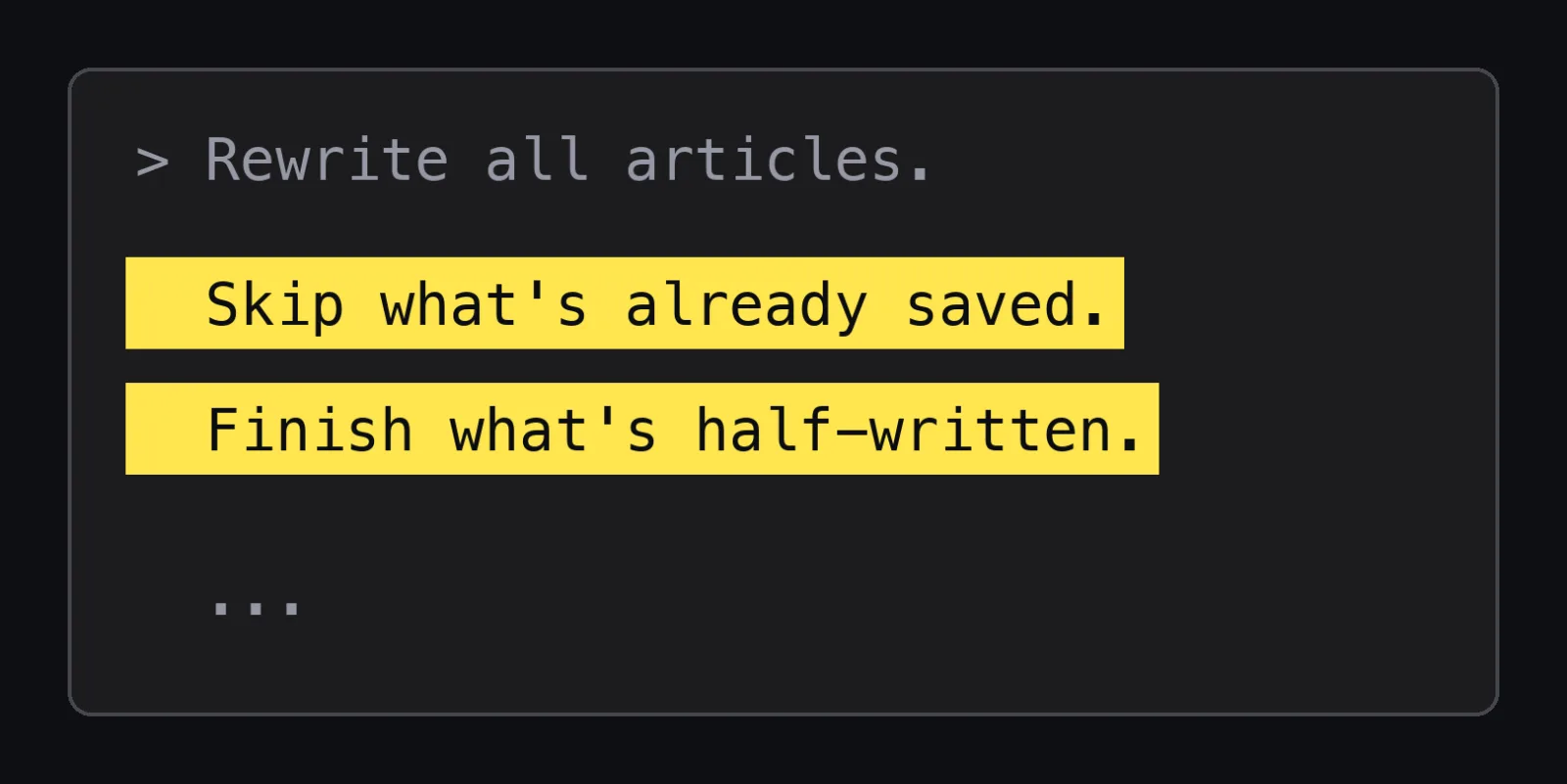
Now, when I hand Claude a big job, my instructions always say two things. Skip what's already saved. Finish what's half-written.
In plain words, it's like this:
Before you start, look at what's already done and skip it.
If something is half-done, finish it first.
Save each piece as soon as it's done.
So when a job stops, I don't dig through the mess. I just say, continue. And it picks up where it left off. That one habit turned that night's mess into a one-word fix.
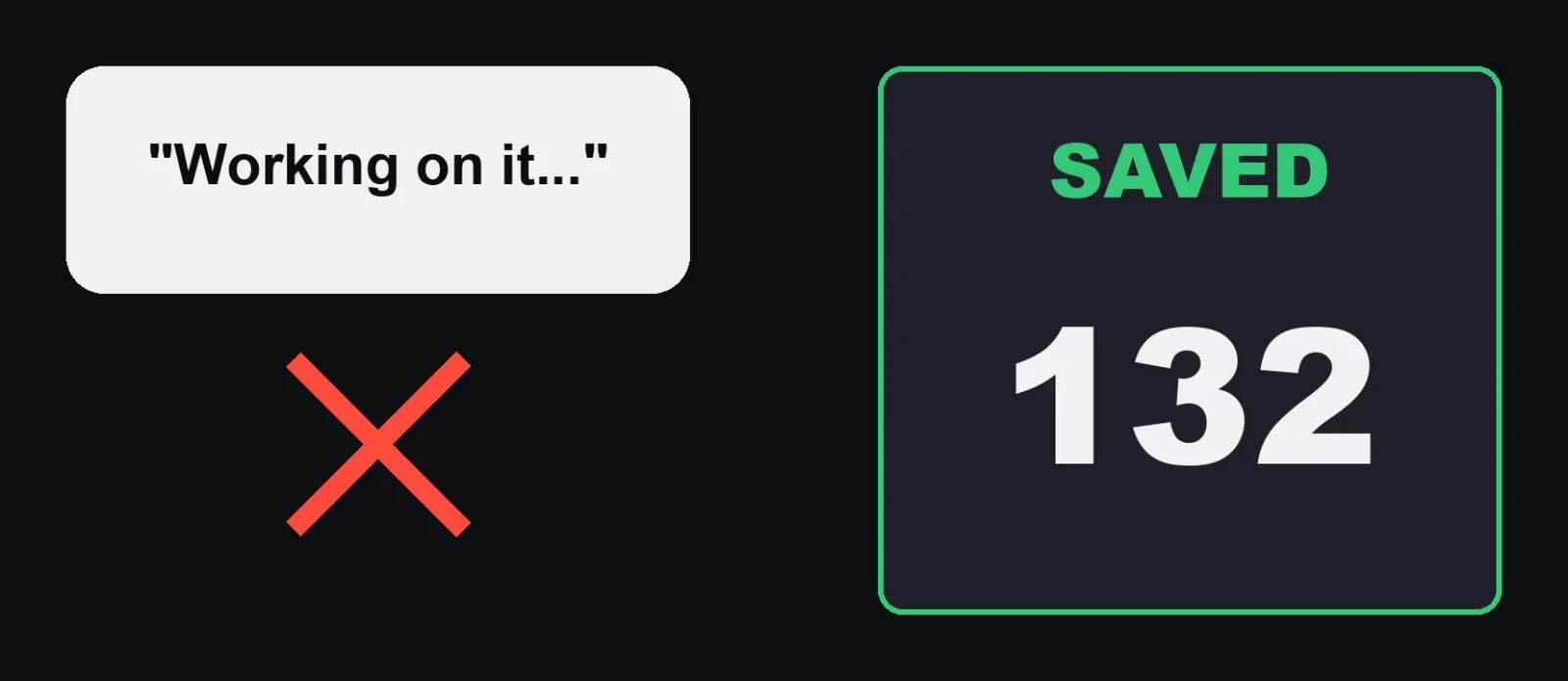
And I count progress by what's actually saved, not by what a session tells me. A stopped session can't tell you it stopped. On the day of the three stops, the count of saved articles was the only thing that told me.
2. Keep a second AI ready
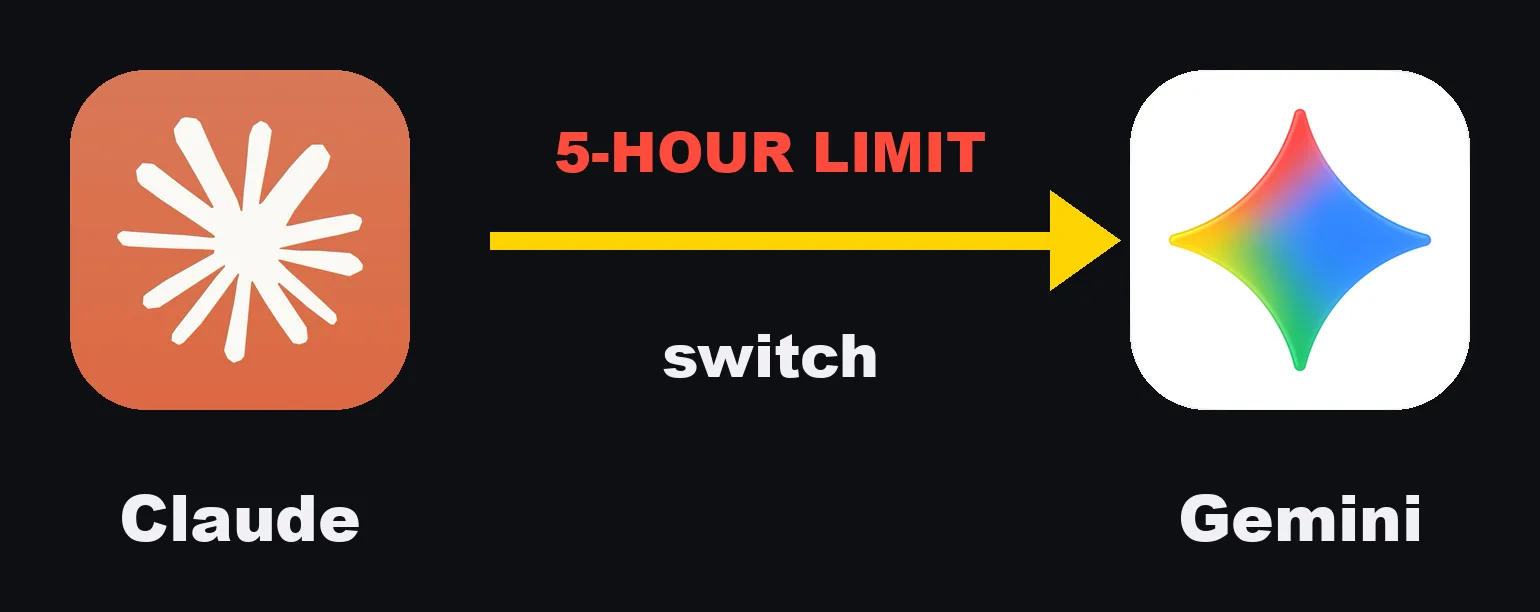
My article system runs on Claude. When it hits the five-hour limit, it switches to Google's Gemini and keeps going.
The point is that it's decided in advance. I don't make that choice at two in the morning. The switch is already built into the system.
I also ask OpenAI's Codex for a second opinion almost every day. So if I ever need to lean on it more, it's not a new tool for me.
Not because Claude is bad. Claude is my main tool. But one supplier is one place where everything can stop.
3. Know your two limits
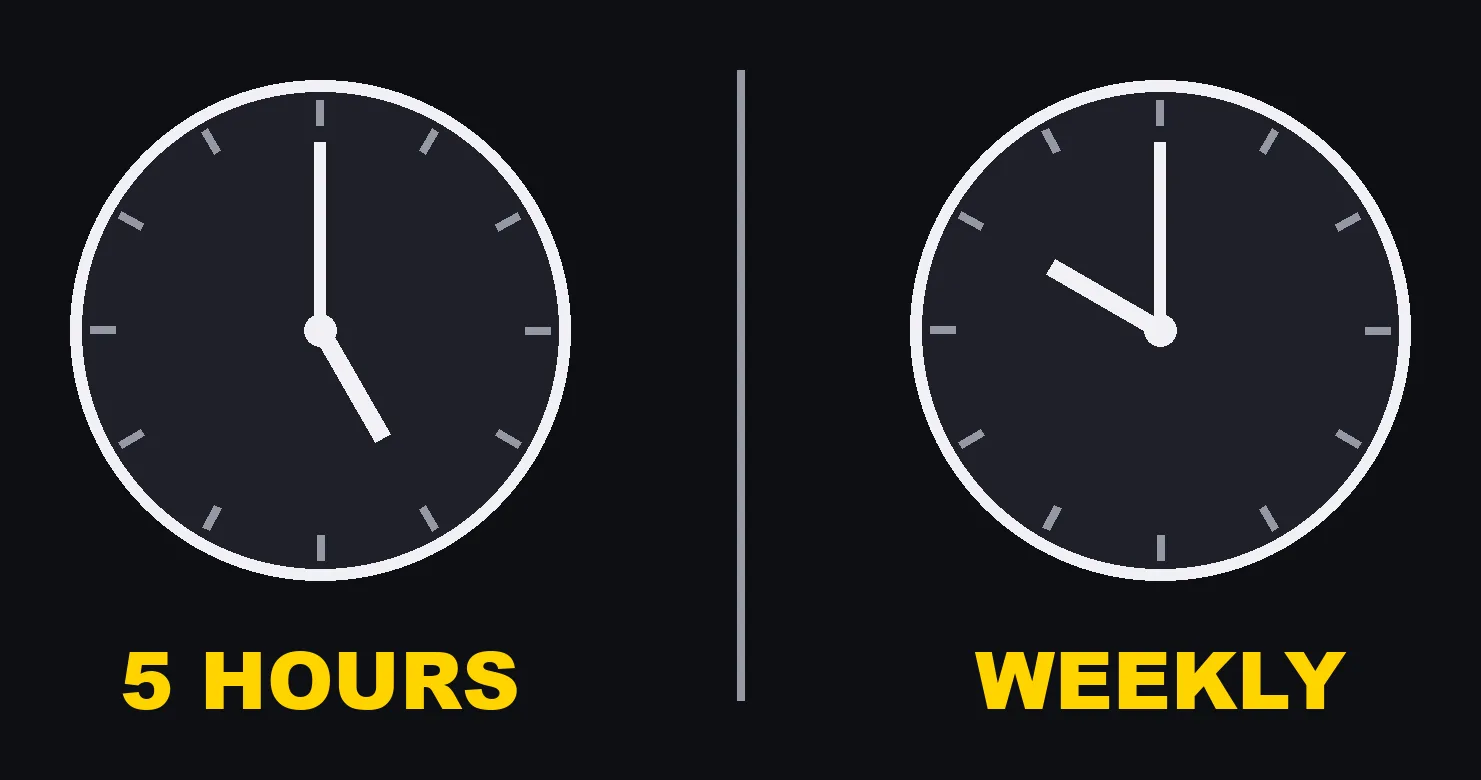
There are two limits, and they're separate. One comes back every five hours. The other comes back once a week. Hitting one doesn't tell you anything about the other.
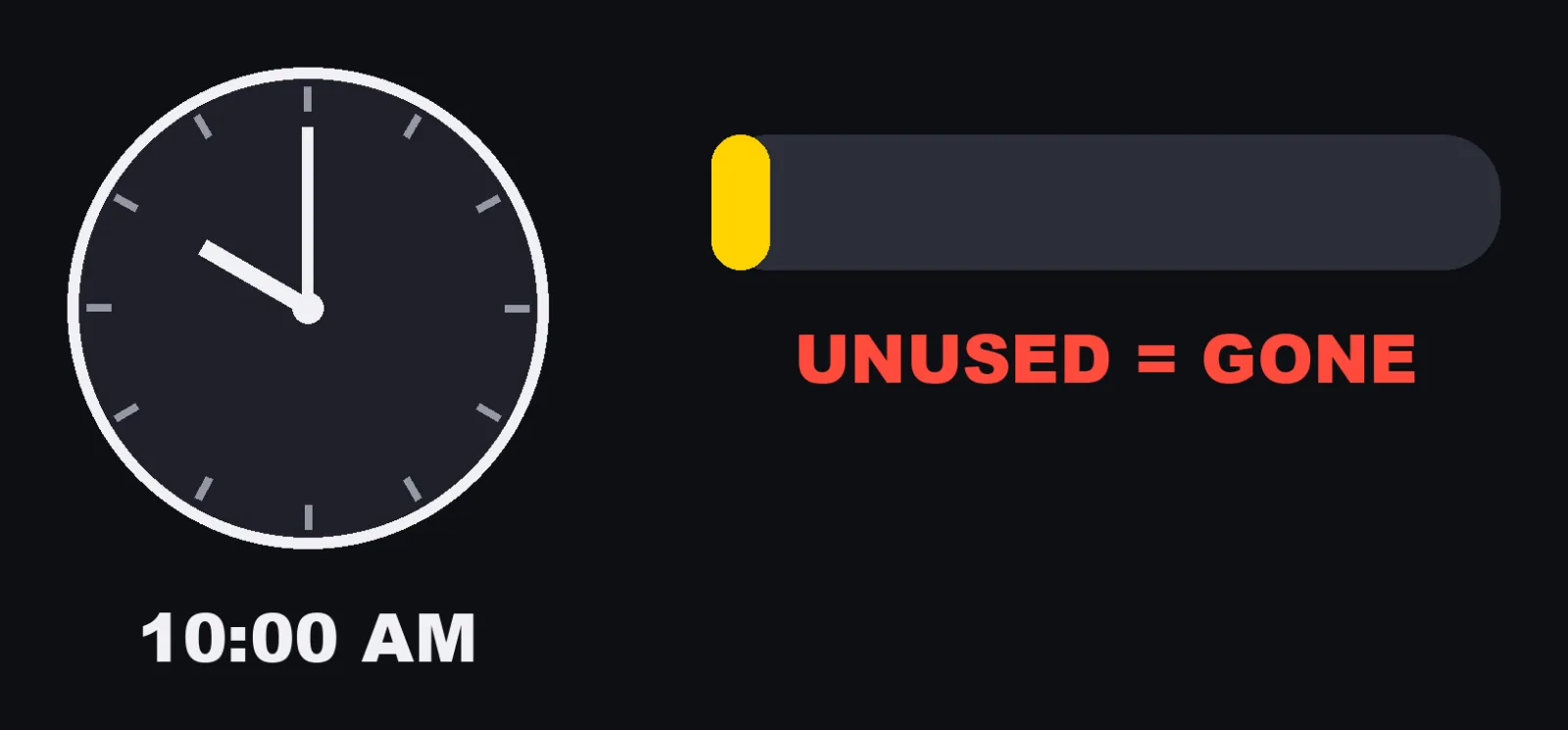
My weekly limit comes back at ten in the morning. Anything I haven't used by then is simply gone. So I keep the work running right up to that time.
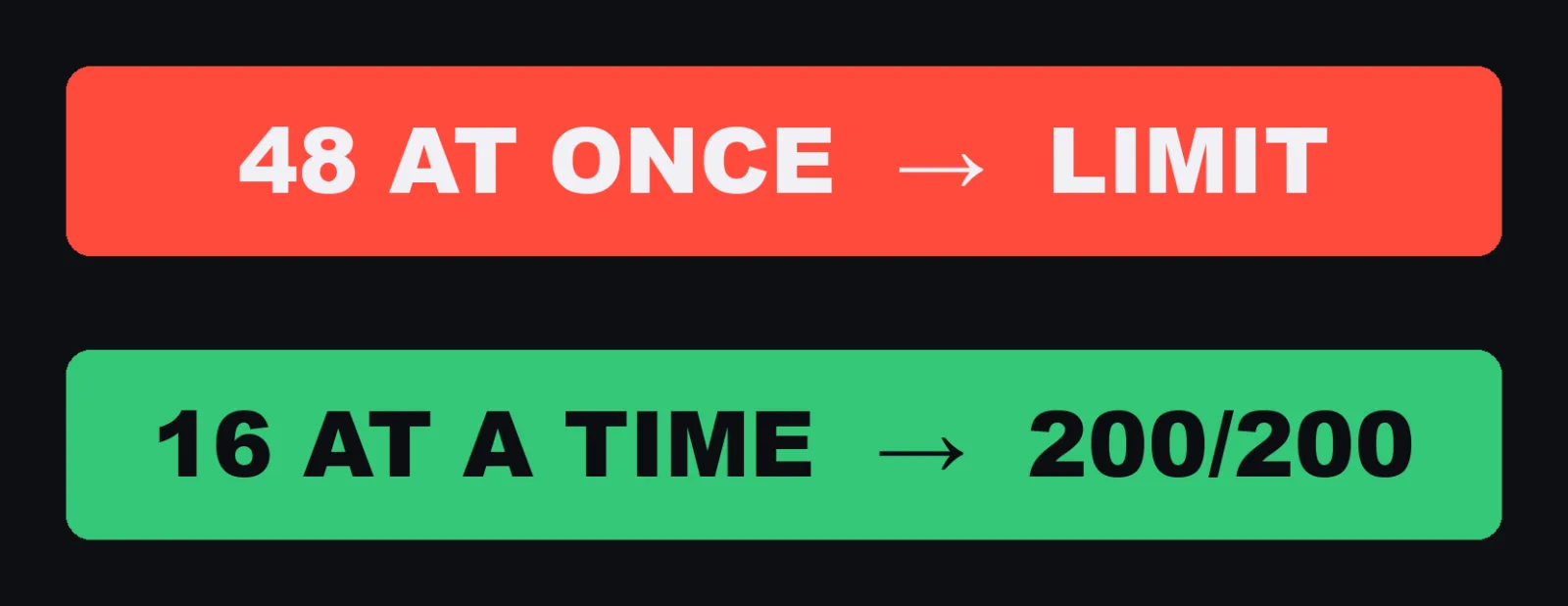
And I learned the hard way not to start everything at once. Once, I ran 48 sessions at the same time, and hit the five-hour limit fast. Sixteen at a time finished all two hundred articles.

One more thing. When six jobs told me I'd hit my weekly limit, I tried again a few minutes later and they went through. So before you stop everything, test one job.
The three habits, next to the nights they came from:
| Habit | The night it came from | What it changes |
|---|---|---|
| Skip what's saved, finish what's half-written, save each piece | 34 batches stopped half-written at 1:50 AM | A stop becomes one word: continue |
| Count what's saved, not what a session says | Three stops in one day, and nothing told me | You notice a stop in minutes, not hours |
| A second AI switched in automatically | Four hours idle when another account hit its limit | The work keeps going while Claude waits |
| Know when each limit resets | Weekly allowance left unused at reset time | You use what you paid for |
| Run fewer sessions at once | 48 at once hit the five-hour limit fast | Sixteen at a time finished all 200 |
| Test one job before stopping everything | Six jobs said "weekly limit", then went through | You don't stop for a limit you haven't hit |
Is Anthropic going bankrupt? My answer
I started this company right after the dot-com crash. I got through the crash when Lehman Brothers fell, too. What kept me going then still works now. Don't bet everything on one company. Make sure nothing can stop you for long.
Claude isn't going anywhere. Your job is to make sure your work keeps going too, on the night the limit hits.
Anthropic won't run out of money anytime soon. Your limit will run out this week. Get ready for that.
Sources:
- Anthropic, PBC, Form S-1/A (Amendment No. 1), filed November 2, 2026, SEC EDGAR (sec.gov/Archives/edgar/data/2130357/000162828026068676/)
- Claude, "Plans & Pricing" (claude.com/pricing), read November 7, 2026
- Claude Help Center, "Use Claude Code with your Pro, Max, or Ultra plan" and "What is the Max plan?" (support.claude.com), read November 7, 2026